

Key takeaways
- Online lending is a legitimate $150+ billion industry with many reputable providers serving small businesses nationwide
- Check state licensing through NMLS Consumer Access and verify membership in industry organizations like the Responsible Business Lending Coalition
- Red flags include upfront fees before approval, pressure tactics, no physical address, and APRs that aren't clearly disclosed
- Legitimate online lenders must comply with state usury laws, Truth in Lending Act disclosures, and Equal Credit Opportunity Act requirements
- The SBA partners with approved online lenders through its 7(a) and Community Advantage programs, providing an additional layer of vetting
The online business lending industry has matured significantly since its emergence in the early 2010s. Today, it represents a substantial segment of the small business credit market - the Federal Reserve's 2025 Small Business Credit Survey found that online lenders received applications from 32% of small employer firms seeking financing, compared to 43% who applied to large banks. While this demonstrates widespread adoption, the industry's relative youth and lighter regulatory oversight compared to traditional banking means borrowers must exercise due diligence to separate legitimate providers from predatory operators.
How SmarterLends Helps With This
SmarterLends maintains a curated marketplace of vetted online lenders, removing the guesswork from finding legitimate financing. Every lender in our network undergoes verification of state licensing, regulatory compliance, and transparent pricing practices. Our platform displays standardized APR comparisons and total cost of capital figures, making it easy to compare offers on equal terms. When you submit a single application through SmarterLends, you receive pre-qualified offers only from lenders we've thoroughly screened - protecting you from the predatory operators that give the industry a bad name.
Understanding the Online Lending Landscape
Online business lending encompasses several distinct categories, each with different regulatory frameworks and risk profiles. Understanding these categories helps you evaluate the legitimacy of any lender you encounter.
Term Loan Providers
Online term loan providers function similarly to traditional bank lenders but operate primarily through digital platforms. These companies typically offer loans ranging from $25,000 to $500,000 with repayment terms of one to five years. Legitimate term loan providers are licensed in the states where they operate and must comply with Truth in Lending Act requirements for disclosure.
Merchant Cash Advance Companies
Merchant cash advances technically constitute purchases of future receivables rather than loans, which historically allowed providers to operate outside lending regulations. However, multiple states including California, New York, and Virginia now require disclosure of APR-equivalent rates under new commercial financing disclosure laws enacted between 2022 and 2025. The California Department of Financial Protection and Innovation reported a 23% increase in registered commercial financing providers between 2023 and 2025, indicating growing regulatory compliance.
SBA-Approved Online Lenders
The Small Business Administration maintains a network of approved lenders authorized to issue SBA-guaranteed loans. Several online platforms hold SBA approval, providing an additional layer of government vetting. According to SBA data, the agency approved over $31 billion in 7(a) loans during fiscal year 2025, with a growing percentage originated through technology-enabled lending platforms.
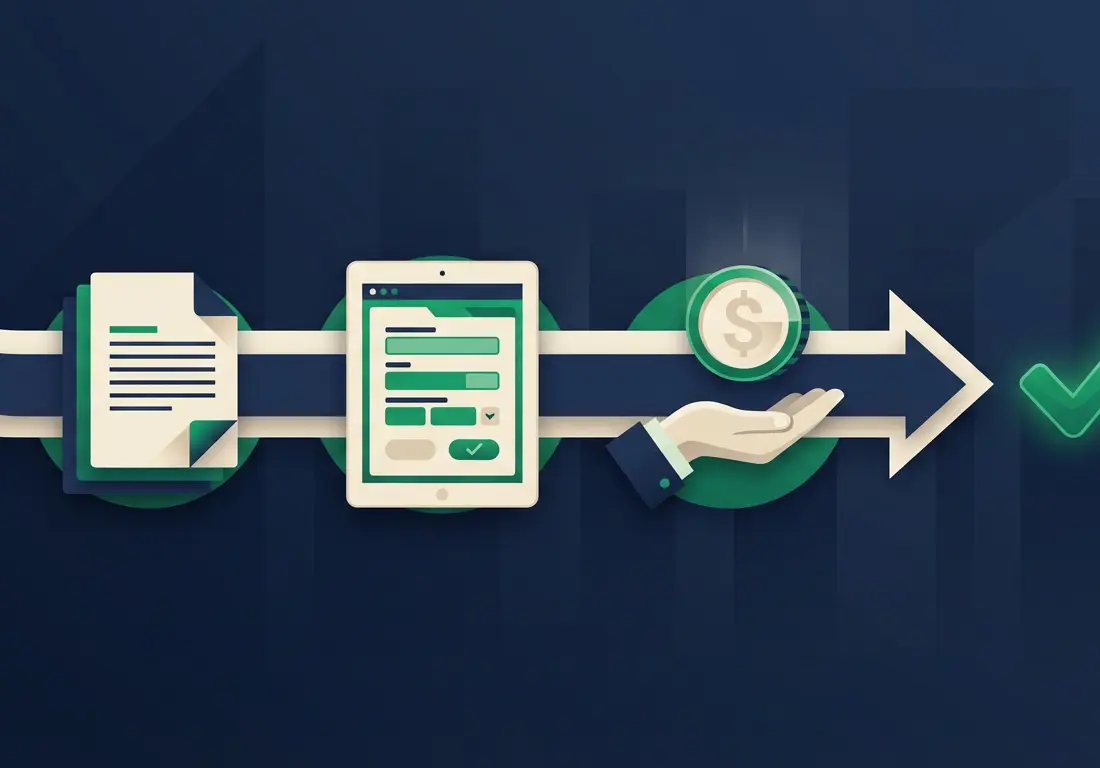
A typical application moves from documents to underwriting to funding.
How to Verify a Lender's Legitimacy
 Verifying lender credentials online has become an essential step for savvy business owners.
Protecting your business requires systematic verification before sharing sensitive financial information or accepting any financing offer.
Check State Licensing
Most states require lenders to hold specific licenses to offer business loans to companies within their borders. The Nationwide Multistate Licensing System (NMLS) Consumer Access database allows you to verify whether a lender holds required licenses. Search by company name or NMLS identification number to confirm licensing status and review any regulatory actions.
Verify Physical Presence
Legitimate lenders maintain verifiable physical addresses and contact information. Search for the company's headquarters address, confirm it exists, and check whether the address appears in other business registrations. Be wary of lenders who only provide PO boxes or virtual office addresses.
Review Industry Memberships
The Responsible Business Lending Coalition developed the Small Business Borrowers' Bill of Rights, a voluntary code of conduct adopted by legitimate lenders. Member companies commit to transparent pricing, non-abusive products, and responsible underwriting. Similarly, membership in organizations like the Innovative Lending Platform Association indicates a lender's commitment to industry standards.
Examine Disclosure Practices
The Consumer Financial Protection Bureau and Federal Trade Commission have taken enforcement actions against lenders engaging in deceptive practices. Legitimate lenders provide clear disclosure of:
- Annual Percentage Rate or APR-equivalent for non-loan products
- Total repayment amount over the financing term
- Payment frequency and amounts
- All fees, including origination, servicing, and prepayment penalties
- Collateral or personal guarantee requirements
Red Flags That Indicate Predatory Lenders
Certain practices consistently indicate problematic lenders that you should avoid entirely.
Upfront Fee Requirements
Legitimate lenders never require payment before loan approval and funding. Requests for "processing fees," "insurance deposits," or "good faith payments" before receiving funds represent classic advance-fee fraud schemes. The Federal Trade Commission specifically warns against any lender demanding payment before delivering on a loan promise.
Pressure Tactics and Urgency
Reputable lenders allow borrowers time to review terms and compare options. High-pressure sales tactics, artificial deadlines, and discouragement from seeking other quotes indicate a lender who knows their terms cannot withstand comparison. Legitimate lenders welcome borrower due diligence.
Guaranteed Approval Claims
No legitimate lender guarantees approval regardless of credit history or financial condition. Claims of "guaranteed approval" or "no credit check" financing typically indicate either fraud or extremely high-cost products designed for borrowers with no other options. The Federal Reserve's survey data shows that even among online lenders, approval rates averaged 48% in 2024 - legitimate lenders do decline applications.
Missing or Obscured Pricing
If you cannot determine the total cost of financing before signing documents, treat this as a major red flag. Some predatory lenders deliberately obscure costs using factor rates, weekly payment quotes without annualization, or buried fee structures. California's Commercial Financing Disclosure Law now requires online lenders to display APR equivalents, total repayment amounts, and other standardized metrics - legitimate lenders comply with these requirements even in states without such mandates.
Comparing Legitimate Online Lender Costs
Understanding typical pricing helps you identify outliers that may indicate predatory products. The following table shows representative rates for various legitimate online lending products in 2026:
| Product Type | Typical APR Range | Term Length | Minimum Revenue Requirement |
|---|---|---|---|
| SBA 7(a) via Online Platform | 11.5% - 15.5% | 10-25 years | $100,000+ annual |
| Online Term Loan (Prime) | 12% - 24% | 1-5 years | $150,000+ annual |
| Online Term Loan (Near-Prime) | 24% - 45% | 6 months - 3 years | $75,000+ annual |
| Online Line of Credit | 15% - 35% | Revolving | $100,000+ annual |
| Invoice Factoring | 15% - 45% effective | 30-90 days | Varies by receivables |
| Merchant Cash Advance | 40% - 150%+ effective | 3-18 months | $50,000+ annual |
- APR Low
- APR High
Regulatory Protections for Business Borrowers
 State licensing and regulatory compliance documents provide crucial legitimacy signals.
While business loans receive fewer regulatory protections than consumer credit, several federal and state frameworks still apply.
Federal Protections
The Equal Credit Opportunity Act prohibits discrimination in any credit transaction, including business loans. The Federal Trade Commission Act bars unfair or deceptive acts and practices in commerce - the FTC has used this authority to pursue predatory business lenders. Additionally, business loans under $50,000 secured by personal property must comply with Truth in Lending Act requirements.
State-Level Disclosure Laws
California, New York, Virginia, Utah, and Florida have enacted commercial financing disclosure requirements between 2018 and 2025. These laws mandate that online lenders provide standardized pricing information comparable to consumer loan disclosures. The California Department of Financial Protection and Innovation actively enforces these requirements and publishes compliance guidance.
Industry Self-Regulation
The Responsible Business Lending Coalition's Small Business Borrowers' Bill of Rights establishes voluntary standards that signatories must meet. These include the right to transparent pricing, the right to non-abusive products, and the right to fair treatment from brokers. While not legally binding, coalition membership indicates a lender's commitment to ethical practices.
Due Diligence Checklist Before Applying
Before submitting an application to any online lender, complete the following verification steps:
- Search the lender's name plus "complaints" or "lawsuit" in your search engine
- Check NMLS Consumer Access for licensing status
- Verify the Better Business Bureau profile and complaint history
- Confirm the physical address exists using Google Street View
- Request a written quote with APR and total repayment before providing financial documents
- Ask whether the lender is a direct funder or a broker
- Review the financing agreement with an attorney or accountant before signing
Making an Informed Decision
Online business lenders have become an integral part of the small business financing ecosystem, with the Federal Reserve documenting their growing role in serving businesses that struggle to access traditional bank credit. The FDIC's 2023 Survey of Household Use of Banking and Financial Services found that 47% of small business owners had used online or mobile banking for business purposes, reflecting broad comfort with digital financial services.
The key to safely accessing online business financing lies in verification and comparison. Legitimate lenders welcome scrutiny, provide clear documentation, and compete openly on price and terms. By conducting proper due diligence and using platforms like SmarterLends that pre-screen lenders, you can access the speed and convenience of online lending while avoiding the predatory operators that undermine trust in the industry.
Ready to connect with verified, legitimate online lenders? Submit your information through SmarterLends to receive pre-qualified offers from our network of screened providers - with transparent pricing that lets you compare options confidently.
Frequently asked questions
Sources(5)
- 1.Federal Reserve Small Business Credit Survey — 2024 Report on Employer FirmsFederal Reserve Banks · Accessed 2026-04-21
- 2.SBA Lender Activity ReportsU.S. Small Business Administration · Accessed 2026-04-21
- 3.California DFPI — Commercial Financing DisclosuresCalifornia Department of Financial Protection and Innovation · Accessed 2026-04-21
- 4.FTC — What to Know About Advance-Fee LoansFederal Trade Commission · Accessed 2026-04-21
- 5.2023 FDIC Survey of Household Use of Banking and Financial ServicesFederal Deposit Insurance Corporation · Accessed 2026-04-21
Continue exploring
Funding products
Related questions
Tools & calculators
Ready to see what your business qualifies for?
Check eligibility in minutes. It won't impact your credit score.