

Key takeaways
- Equipment financing can cover up to 100 percent of machinery costs, with the equipment itself serving as collateral
- SBA 7(a) loans offer manufacturers up to five million dollars with interest rates in the high-six to low-seven percent range
- Working capital loans typically range from five thousand to five hundred thousand dollars based on revenue and credit profile
- Manufacturing digital transformation investments qualify for multiple financing structures including term loans and equipment leases
- Federal Reserve data shows approximately 58 percent of small firms rely on credit cards as a financing source
Manufacturing remains the backbone of American industrial output, with the United States producing approximately 18 percent of global manufacturing output according to economic data. For shop owners running CNC operations, fabrication facilities, or food processing plants, securing the right funding can mean the difference between landing a major contract and watching it go to a competitor. This guide breaks down how manufacturing businesses can access capital for equipment upgrades, facility expansions, and working capital needs.
Why Manufacturing owners choose SmarterLends
Manufacturing funding decisions involve complex calculations around equipment depreciation, production capacity, and long lead times between contract signing and final payment. Traditional banks often struggle to underwrite manufacturing loans because they do not understand the asset-heavy nature of the business or the cyclical revenue patterns that come with project-based work.
SmarterLends connects manufacturers with lenders who specialize in equipment-intensive industries. Whether you need to finance a new CNC machining center, bridge cash flow during a slow quarter, or fund the build-out of additional production capacity, our marketplace matches your specific situation with appropriate funding options. We work with lenders who understand that a manufacturer's balance sheet looks different from a retail operation and who can properly evaluate machinery collateral.
Common funding uses for Manufacturing
Manufacturing businesses deploy capital across a wide range of operational and growth needs. The table below outlines typical funding applications and their associated cost ranges.
| Funding Use | Typical Cost Range | Common Financing Approach |
|---|---|---|
| CNC machinery and machining centers | $50,000 - $500,000+ | Equipment financing or lease |
| Production line automation | $100,000 - $2,000,000 | SBA 504 or equipment loan |
| Raw materials inventory | $25,000 - $250,000 | Working capital line of credit |
| Facility expansion or build-out | $200,000 - $5,000,000 | SBA 7(a) or commercial real estate loan |
| Quality control equipment | $15,000 - $150,000 | Equipment financing |
| Fleet vehicles and delivery trucks | $30,000 - $300,000 | Equipment or vehicle financing |
| Digital transformation technology | $50,000 - $500,000 | Term loan or equipment financing |
The manufacturing sector continues to focus on adopting advanced technologies including robotics, automation, and AI integration. These investments often require significant upfront capital but can dramatically improve productivity and competitive positioning.
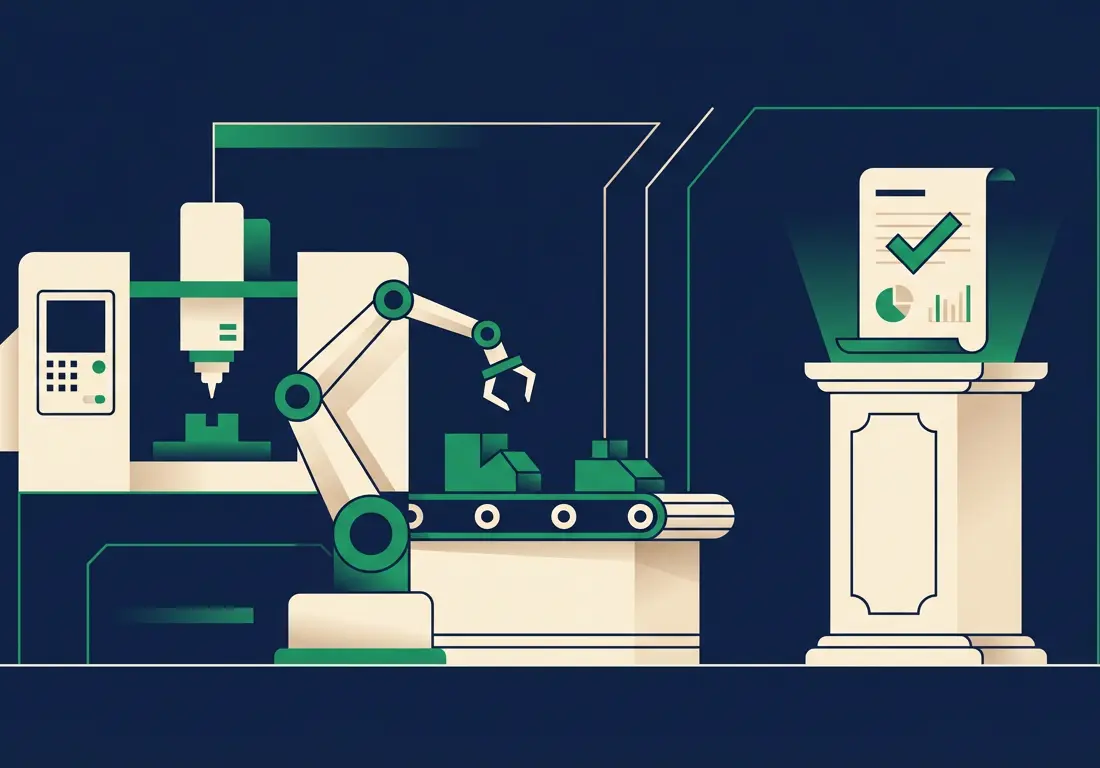
Manufacturers typically finance equipment over 5–10 years.
Recommended funding types
Equipment Financing
For manufacturers, equipment financing stands as the most natural fit for capital equipment purchases. According to recent equipment financing data, loans typically range from $5,000 to $5 million or more depending on the lender and equipment type. Many lenders will finance up to 100 percent of equipment cost, with the machinery itself serving as collateral.
This structure benefits manufacturers because approval often depends more on the equipment's value and the business's cash flow than on the owner's personal credit score alone. For a shop looking to add a fiber laser cutter or automated welding cell, equipment financing preserves working capital while spreading the cost over the asset's useful life.
SBA 7(a) Loans
The SBA 7(a) program remains the flagship option for manufacturers seeking larger amounts or longer terms. These government-guaranteed loans extend up to $5 million with terms reaching 25 years for real estate and 10 years for equipment. The SBA has developed specific programs targeting manufacturing needs, including the 7(a) Manufacturers' Access to Revolving Credit program designed for working capital and inventory financing.
- Low End
- High End
According to Federal Reserve Bank of Kansas City data, median interest rates on new small business term loans landed in the high-six percent to low-seven percent range in late 2025. SBA loans typically fall within or slightly above this range depending on loan size and borrower qualifications.
Working Capital Lines of Credit
Manufacturing cash flow often follows an irregular pattern tied to project completion and customer payment terms. A working capital line of credit provides flexibility to cover payroll, purchase raw materials, or manage seasonal slowdowns without taking on fixed-term debt for short-term needs.
Working capital products typically range from $5,000 to $500,000 based on business revenue and credit profile. Minimum annual revenue requirements usually fall between $100,000 and $250,000 depending on the loan size and lender. This revolving structure lets manufacturers draw funds when needed and repay when customer payments arrive.
Manufacturing-specific market data
The manufacturing sector presents unique characteristics that shape funding decisions. Understanding industry-wide patterns helps owners benchmark their own situations and anticipate lender expectations.
Manufacturing businesses typically carry higher fixed costs than service industries due to equipment, facilities, and skilled labor requirements. This creates both challenges and opportunities when seeking financing. Lenders recognize that manufacturing assets hold real value and can serve as collateral, but they also scrutinize whether a manufacturer's revenue can reliably service debt through business cycles.
- Min Amount
- Max Amount
The digital transformation trend sweeping through manufacturing creates substantial capital needs. Technologies like AI, cloud computing, and robotics automation require significant upfront investment but deliver productivity improvements that strengthen loan applications. Lenders increasingly view these investments favorably when manufacturers can demonstrate clear efficiency gains or competitive advantages.
Contract manufacturers face particular cash flow challenges because they often must purchase raw materials and fund production before receiving payment. Invoice factoring and asset-based lending can bridge these gaps, though manufacturers should carefully evaluate the total cost of such arrangements.
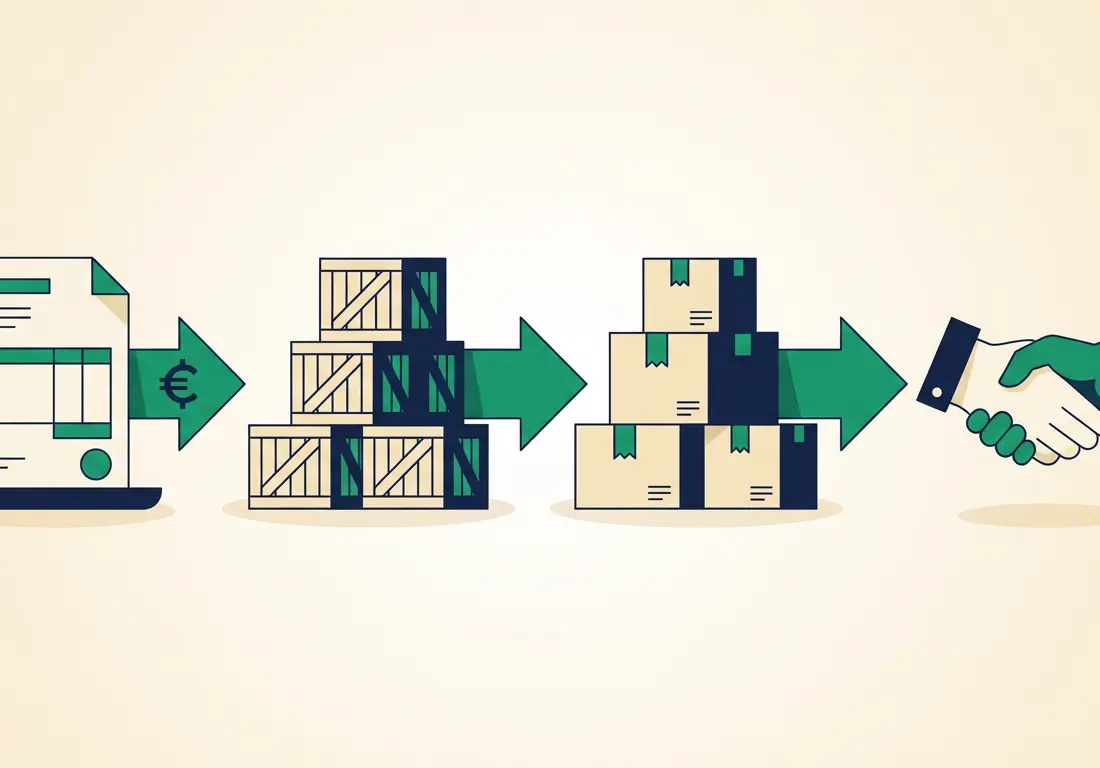
PO financing funds raw materials so large orders can be fulfilled.
A real manufacturer's funding experience
Robert in Ohio operates a precision machining shop serving automotive and aerospace customers. When a major aerospace contractor offered a multi-year parts contract, Robert faced a familiar manufacturer's dilemma: the opportunity required adding two CNC turning centers and expanding his quality inspection capabilities, but the customer's payment terms would create a 90-day gap between production costs and revenue.
Rather than passing on the contract, Robert secured equipment financing for the machining centers at competitive rates, using the equipment value to strengthen his application. He paired this with a working capital line to manage the cash flow timing. The combined approach let him take on the contract while preserving his existing banking relationships for future growth.
Frequently asked Manufacturing funding questions
Manufacturing owners often wonder whether their equipment-heavy operations help or hurt their loan applications. The answer depends on the lender and product type. For equipment-specific financing, substantial machinery actually strengthens applications because it provides collateral. For unsecured working capital, lenders focus more on revenue consistency and cash flow margins.
Timing questions come up frequently as well. Most equipment financing decisions move faster than SBA loans, with approvals often coming within days rather than weeks. Manufacturers facing time-sensitive equipment opportunities should consider equipment financing or bridge products that can close quickly, potentially refinancing into longer-term SBA debt once immediate needs are met.
Owners also ask about credit requirements. While SBA loans typically require stronger personal credit scores, equipment financing may approve owners with credit in the mid-600s if business fundamentals look solid. Revenue requirements vary by lender but often start around $100,000 annually for smaller equipment loans.
The question of leasing versus buying equipment surfaces regularly. Leasing preserves capital and may offer tax advantages through treating payments as operating expenses. Ownership builds equity and eliminates payments once the equipment is paid off. The right choice depends on how quickly the equipment will become obsolete and whether the manufacturer prefers balance sheet flexibility or asset ownership.
Take the next step with your manufacturing funding
Whether you need to finance new production equipment, expand your facility, or strengthen working capital to pursue larger contracts, SmarterLends can connect you with lenders who understand manufacturing operations. Our marketplace approach means you see multiple options tailored to your specific situation rather than being limited to a single bank's programs. Start your application today to explore what funding solutions fit your manufacturing business.
Editorial standards. SmarterLends is a referral marketing platform and earns compensation when users connect with funding partners. Our industry funding information is editorially independent and grounded in named primary sources (SBA, BLS, Census, Federal Reserve, FDIC). See our Disclosures for details.
Frequently asked questions
Sources(9)
- 1.Equipment Financing Guide: Everything Your Business Needs to Know in 2026Crestmont Capital · Accessed 2026-04-24
- 2.SBA Loan Maximums in 2026Lendio · Accessed 2026-04-24
- 3.Business Loan Rates 2026: What to Expect and How to Qualify for Lower RatesBusiness.com · Accessed 2026-04-24
- 4.Why credit card rate caps hurt consumers, small businessesPayment Week · Accessed 2026-04-24
- 5.Financing Tips for Women Business Owners: How to Secure Funding and Grow in 2026Crestmont Capital · Accessed 2026-04-24
- 6.Digital Transformation Financing: The Complete Guide for Business OwnersCrestmont Capital · Accessed 2026-04-24
- 7.2025 Manufacturing Research ReviewGlobeNewswire · Accessed 2026-04-24
- 8.Economy of the United StatesWikipedia · Accessed 2026-04-24
- 9.What Manufacturers Should Know About Machinery FinancingWorld Machinery · Accessed 2026-04-24
Funding Estimator
Compare options for your business
Day-to-day operations, payroll, inventory.
Illustrative estimate only. Actual rates, terms, and eligibility depend on your application.
Continue exploring
Funding products
Related questions
Tools & calculators
Ready to see what your business qualifies for?
Check eligibility in minutes. It won't impact your credit score.