

Key takeaways
- Ecommerce businesses face unique cash flow challenges from inventory pre-purchasing, seasonal demand spikes, and platform fee timing that specialized funding products address
- Revenue-based financing aligns repayment with sales volume, making it well-suited for online retailers with predictable transaction patterns
- Business lines of credit provide the flexibility ecommerce operators need for rapid inventory restocking and marketing spend adjustments
- SBA 7(a) loans offer lower rates for established online retailers seeking larger capital amounts for inventory expansion or technology investments
- Most ecommerce lenders evaluate payment processor data and marketplace metrics alongside traditional financial statements
Online retail continues to capture a growing share of consumer spending, creating both opportunities and funding challenges for ecommerce business owners. Whether you operate through marketplaces, a direct-to-consumer storefront, or multiple sales channels, accessing capital for inventory, marketing, and technology investments remains essential for growth.
Why Ecommerce owners choose SmarterLends
Ecommerce businesses operate in a fast-moving environment where timing matters. A product trending on social media needs immediate inventory investment. A successful holiday campaign requires restocking within days, not weeks. Traditional bank financing often moves too slowly for these realities.
SmarterLends connects online retailers with lenders who understand ecommerce cash flow patterns. Our marketplace aggregates options from revenue-based financing providers, business credit lines, and SBA-preferred lenders - all evaluated against your specific sales data. Rather than submitting multiple applications, you receive matched offers based on your actual payment processing volume and marketplace performance.
The platform integrates directly with major payment processors and marketplaces, allowing lenders to verify revenue without extensive documentation. This data-driven approach often results in faster approvals and more accurately sized offers than traditional underwriting methods.
Common funding uses for Ecommerce
| Funding Use | Typical Cost Range | Notes |
|---|---|---|
| Bulk inventory purchasing | $15,000 - $500,000 | Pre-season buying for holiday or promotional periods |
| Marketing and customer acquisition | $10,000 - $150,000 | Paid advertising, influencer partnerships, email campaigns |
| Warehouse and fulfillment upgrades | $25,000 - $300,000 | Automation equipment, 3PL deposits, facility expansion |
| Platform and technology investments | $5,000 - $100,000 | Website upgrades, ERP systems, inventory management tools |
| International expansion | $20,000 - $250,000 | New marketplace onboarding, localization, cross-border logistics |
| Cash flow bridging | $10,000 - $200,000 | Covering gaps between inventory purchase and customer payment |
| Returns and refund reserves | $5,000 - $75,000 | Maintaining liquidity during high-return periods |
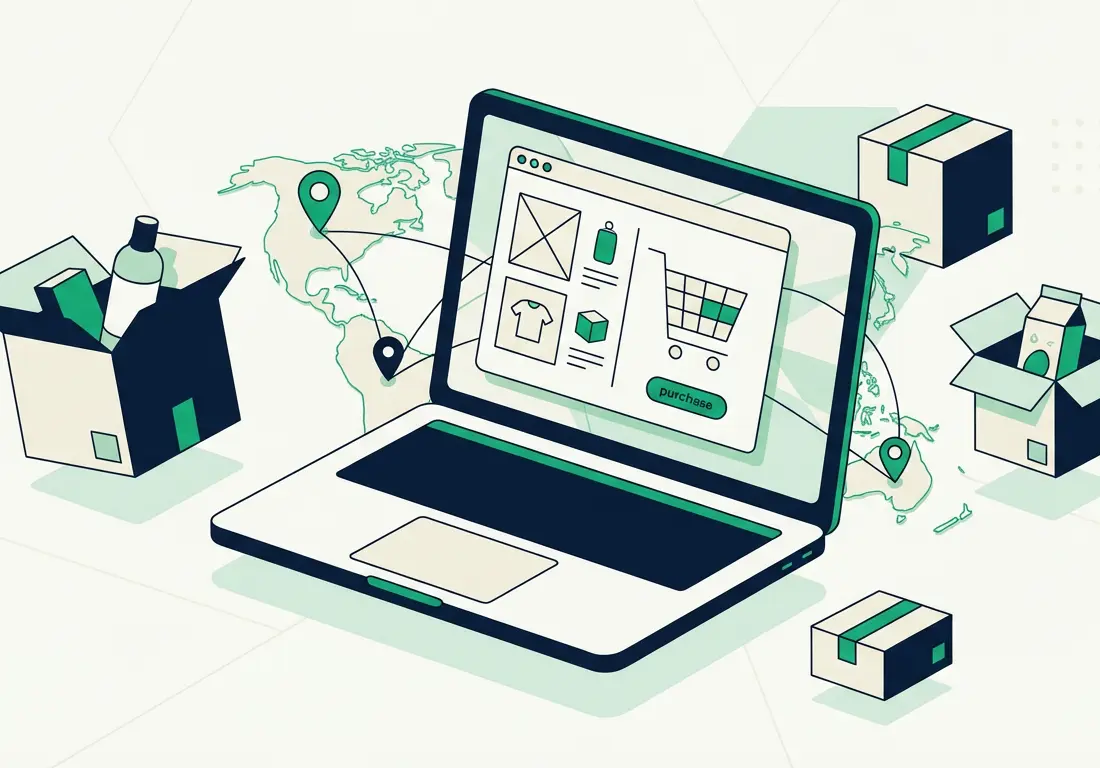
Inventory loans fund the cash gap between buying stock and selling it.
Recommended funding types
Revenue-based financing works particularly well for ecommerce businesses because repayment adjusts with sales volume. During strong months, you pay more; during slower periods, payments decrease automatically. This structure aligns naturally with the inherent variability of online retail. Most providers connect directly to payment processors like Stripe or PayPal, enabling quick verification and funding within days. Advances typically range from one to four months of revenue with factor rates between 1.1 and 1.5.
Business lines of credit provide the flexibility ecommerce operators need for unpredictable opportunities. Unlike term loans with fixed disbursements, a credit line lets you draw funds as needed - whether for a flash inventory purchase, an unexpected advertising opportunity, or managing a supplier payment timing mismatch. Lines typically range from $10,000 to $250,000 with interest only on drawn amounts. According to the Federal Reserve Small Business Credit Survey, lines of credit remain among the most sought-after financing products for small businesses, with approval rates varying significantly based on business age and revenue consistency (Federal Reserve).
SBA 7(a) loans offer established ecommerce businesses access to larger capital amounts at competitive rates. These loans work well for significant investments like warehouse purchases, major technology implementations, or substantial inventory expansion. The SBA 7(a) program provides loans up to $5 million with terms extending to 10 years for working capital and inventory purposes (U.S. Small Business Administration). While the application process takes longer than alternative financing, the lower interest rates and extended terms make these loans cost-effective for planned growth initiatives.
Ecommerce-specific market data
Online retail continues its structural shift in American commerce. According to the U.S. Census Bureau's Monthly Retail Trade Survey, ecommerce sales reached $132.85 billion in February and represented over 18% of total retail sales in recent months - the highest sustained penetration since the initial pandemic surge (U.S. Census Bureau).
This growth creates substantial capital requirements across the sector. The Census Bureau's Business Trends and Outlook Survey tracks business conditions on an ongoing basis, providing real-time insight into challenges facing retail establishments (U.S. Census Bureau).
- Percentage
The Federal Reserve's examination of small business credit conditions shows that retail and wholesale trade businesses frequently seek financing for inventory and working capital purposes, with credit line utilization patterns reflecting seasonal demand cycles (Federal Reserve).
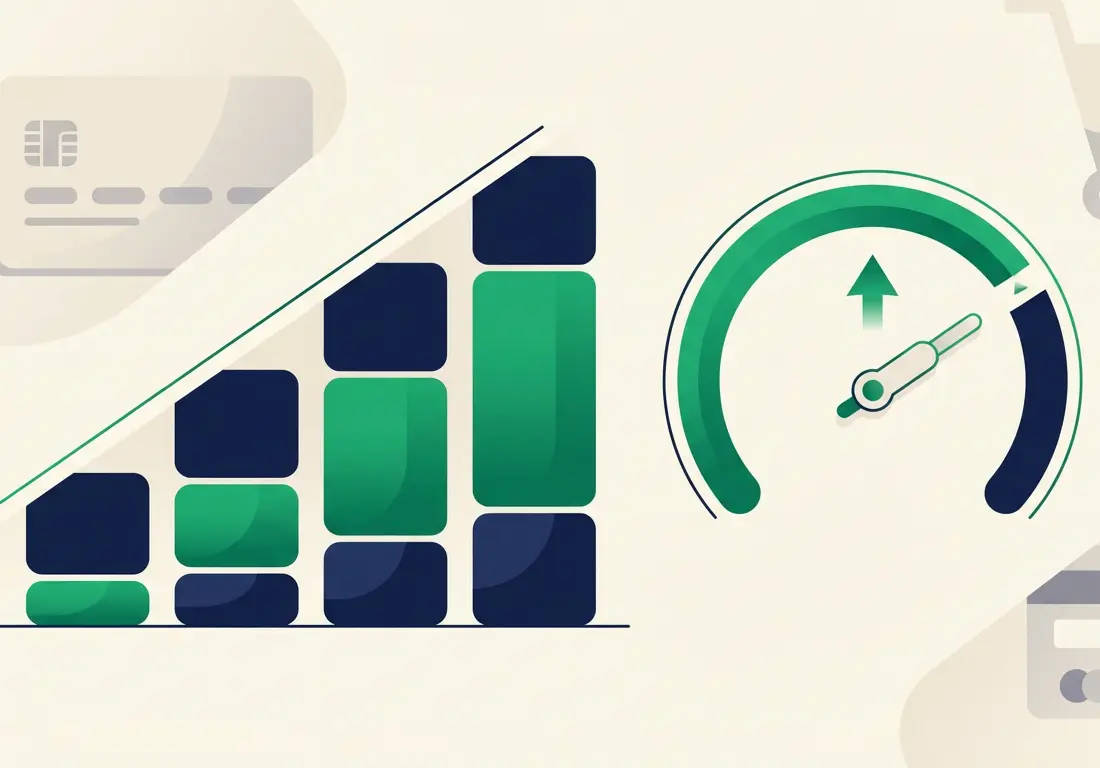
Revenue-based financing scales repayments to daily online sales.
Hypothetical owner example
Consider a hypothetical ecommerce business owner who operates a direct-to-consumer home goods brand. The business has grown steadily through a combination of marketplace presence and owned website sales. With a major home decor season approaching, the owner identifies an opportunity to significantly expand inventory depth across bestselling categories.
The challenge is timing: suppliers require payment sixty to ninety days before products can be received, photographed, listed, and sold. Meanwhile, customer payments arrive thirty days after orders ship, creating a cash gap that exceeds available working capital.
This hypothetical owner might explore a business line of credit to bridge the timing mismatch. The credit line allows drawing funds to pay suppliers, then repaying as customer revenue arrives. Because the line remains available after repayment, it provides ongoing flexibility for future inventory cycles without requiring new applications.
Alternatively, if the owner plans to invest in warehouse automation equipment alongside the inventory expansion, an SBA 7(a) loan could provide a larger, lower-cost capital pool - though the extended application timeline requires earlier planning.
Frequently asked Ecommerce funding questions
What revenue documentation do ecommerce lenders require?
Most ecommerce-focused lenders accept direct connections to payment processors and marketplace seller accounts rather than requiring extensive financial statements. Platforms like Shopify, Amazon Seller Central, and major payment gateways provide transaction-level data that lenders use to verify revenue consistency and calculate appropriate funding amounts. Traditional lenders may still request bank statements and tax returns, but many alternative financing providers have moved toward API-based verification that reduces paperwork substantially.
How does seasonal revenue variability affect ecommerce funding?
Lenders familiar with ecommerce understand that revenue fluctuates based on promotional calendars, product categories, and consumer buying patterns. Revenue-based financing handles this naturally since payments adjust with sales volume. For term loans or lines of credit, expect lenders to examine trailing twelve-month performance rather than recent months alone. Demonstrating year-over-year growth and consistent seasonal patterns strengthens applications even when individual months vary significantly.
Can new ecommerce businesses qualify for funding?
Businesses with less than twelve months of operating history face more limited options but are not excluded entirely. Some revenue-based financing providers work with businesses showing as little as six months of consistent sales. Newer businesses typically qualify for smaller amounts with higher factor rates until they establish longer track records. Building payment processor history and maintaining clean financial records from launch helps position newer businesses for better terms as they mature.
How do marketplace-specific metrics affect loan decisions?
Lenders increasingly evaluate marketplace-specific performance indicators alongside traditional financials. Seller ratings, review scores, account health metrics, and buy box percentages all signal business quality to sophisticated ecommerce lenders. Strong marketplace standing can offset weaker traditional credit metrics in some cases. Conversely, account warnings or suspended listings create significant obstacles regardless of revenue levels.
What are typical funding timelines for ecommerce businesses?
Revenue-based financing and merchant cash advances often fund within two to five business days after application, assuming clean payment processor connections and no verification issues. Business lines of credit typically take one to three weeks from application to availability. SBA loans require the longest timeline, often sixty to ninety days from application to funding, making them better suited for planned investments than urgent capital needs.
Ecommerce businesses thrive on agility - the ability to respond quickly to market opportunities, inventory needs, and competitive pressures. The right funding partner understands these dynamics and provides capital solutions that match your operational reality. Start your matched funding search today to see which options align with your ecommerce business goals.
Editorial standards. SmarterLends is a referral marketing platform and earns compensation when users connect with funding partners. Our industry funding information is editorially independent and grounded in named primary sources (SBA, BLS, Census, Federal Reserve, FDIC). See our Disclosures for details.
Frequently asked questions
Sources(6)
- 1.7(a) loansU.S. Small Business Administration · Accessed 2026-04-26
- 2.504 loansU.S. Small Business Administration · Accessed 2026-04-26
- 3.Monthly Retail Trade - Sales ReportU.S. Census Bureau · Accessed 2026-04-26
- 4.Business Trends and Outlook Survey Data ReleaseU.S. Census Bureau · Accessed 2026-04-26
- 5.Federal Reserve Board - Recent PostingsFederal Reserve · Accessed 2026-04-26
- 6.Advance Retail Sales: Retail TradeFederal Reserve Bank of St. Louis · Accessed 2026-04-26
Funding Estimator
Compare options for your business
Day-to-day operations, payroll, inventory.
Illustrative estimate only. Actual rates, terms, and eligibility depend on your application.
Continue exploring
Funding products
Related questions
Tools & calculators
Ready to see what your business qualifies for?
Check eligibility in minutes. It won't impact your credit score.