


Key takeaways
- Equipment financing remains the primary funding mechanism for trucking operations, covering trucks, trailers, and fleet technology with terms of 3-7 years
- Invoice factoring helps trucking companies overcome the 30-90 day payment cycles common in freight shipping
- SBA 7(a) loans offer trucking businesses up to $5 million for fleet expansion and facility improvements at competitive rates
- The trucking industry faces ongoing challenges from freight rate pressures and diesel costs, making working capital access essential
- Lines of credit provide flexible funding for variable expenses like fuel, repairs, and driver payroll during seasonal fluctuations
Trucking companies operate in a capital-intensive environment where cash flow timing rarely aligns with operational expenses. Fuel costs, maintenance, insurance, and driver payroll demand immediate payment, while shippers often take 30 to 90 days to settle freight invoices. This fundamental mismatch drives trucking operators toward funding solutions that bridge payment gaps and enable fleet growth without depleting working capital reserves.
Why Trucking owners choose SmarterLends
Trucking businesses face unique financing challenges that general-purpose lenders often fail to address. Fleet operators need funding partners who understand asset depreciation schedules, seasonal freight volume patterns, and the critical importance of keeping trucks on the road. SmarterLends connects trucking companies with lenders experienced in transportation-sector financing, helping owners compare equipment financing terms, evaluate invoice factoring programs, and identify SBA loan opportunities suited to their operational scale.
The platform simplifies what many trucking operators describe as an unnecessarily complex process. Rather than approaching multiple lenders individually and repeating documentation submissions, owners complete a single application that generates matched funding options. This efficiency matters in an industry where downtime directly impacts revenue.
Common funding uses for Trucking
| Funding Purpose | Typical Cost Range | Common Financing Method |
|---|---|---|
| New Class 8 truck purchase | $150,000 - $200,000 | Equipment financing |
| Used truck acquisition | $50,000 - $100,000 | Equipment financing or term loan |
| Trailer fleet expansion | $30,000 - $80,000 per unit | Equipment financing |
| Electronic logging device (ELD) systems | $500 - $1,500 per truck | Business line of credit |
| Fuel and operating expenses | $15,000 - $50,000 monthly | Line of credit or invoice factoring |
| Maintenance facility construction | $200,000 - $500,000 | SBA 504 loan |
| Insurance premium financing | $20,000 - $100,000 annually | Short-term business loan |
These cost ranges reflect current market conditions where new truck prices remain elevated and technology investments have become mandatory rather than optional.
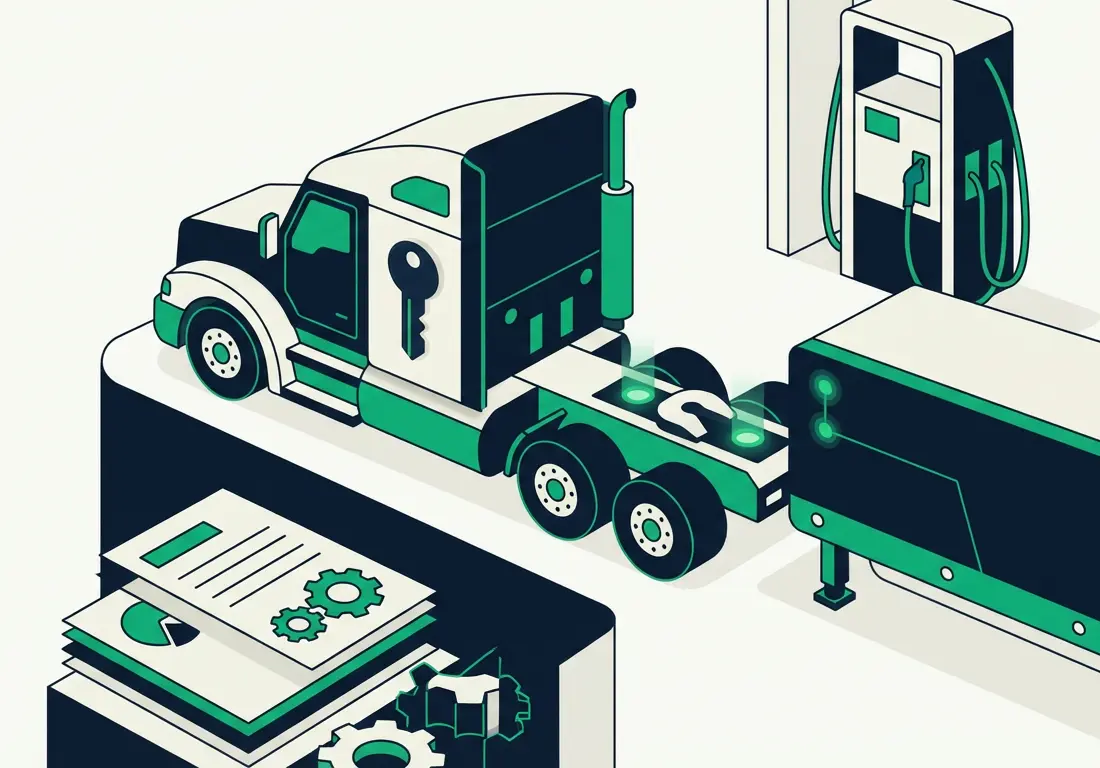
Truck and trailer financing is the largest single funding category for carriers.
Recommended funding types
Equipment Financing
Equipment financing stands as the foundational funding tool for trucking operations. Lenders secure loans against the vehicles themselves, which reduces risk and typically results in more favorable terms than unsecured alternatives. Most equipment financing programs cover 80-100% of purchase costs with repayment terms designed to match the equipment's useful life. For Class 8 trucks, this typically means five to seven year terms.
The structure works particularly well for trucking because trucks generate revenue directly. Lenders evaluate both the borrower's creditworthiness and the equipment's value, which often enables approval for newer operators who might not qualify for traditional bank loans. Section 179 deductions may also provide tax advantages for qualifying purchases.
Invoice Factoring
Freight factoring addresses the payment timing problem that defines trucking cash flow. Rather than waiting 30, 60, or 90 days for shippers to pay invoices, trucking companies sell receivables to factoring companies at a small discount and receive immediate payment. Typical advance rates range from 80% to 95% of invoice value, with the remaining balance minus fees paid when the shipper settles.
This approach works especially well for owner-operators and small fleets running dedicated lanes with creditworthy shippers. The factoring company assumes collection responsibility, which also reduces administrative burden. Unlike traditional loans, factoring approval depends primarily on shipper creditworthiness rather than the trucking company's balance sheet.
SBA 7(a) Loans
For established trucking companies pursuing significant expansion, SBA 7(a) loans provide access to larger capital amounts at competitive rates. The program offers loans up to $5 million with terms as long as 25 years for real estate and 10 years for equipment.
SBA loans require more documentation and longer processing times than alternative financing, but the tradeoff often proves worthwhile for fleet expansions, terminal acquisitions, or major facility improvements. The SBA's partial guarantee reduces lender risk, which translates to lower interest rates and better terms for qualified borrowers.
Trucking-specific market data
The trucking industry continues navigating a challenging freight environment. According to recent industry analysis, the sector faces persistent pressure from low freight rates, excess capacity, and elevated diesel prices. Financial institutions report that trucking credits require careful monitoring, though loans secured by equipment generally maintain strong collateral positions.
- Percent Change
These conditions make strategic financing decisions particularly important. Companies that secured favorable equipment financing terms during previous cycles maintain operational flexibility, while those carrying high-cost debt face tighter margins.
The Federal Reserve reports that approximately 58% of small businesses rely on credit cards as a financing source, though this figure includes all industries. Trucking companies with established banking relationships typically access more specialized financing products with lower effective rates.
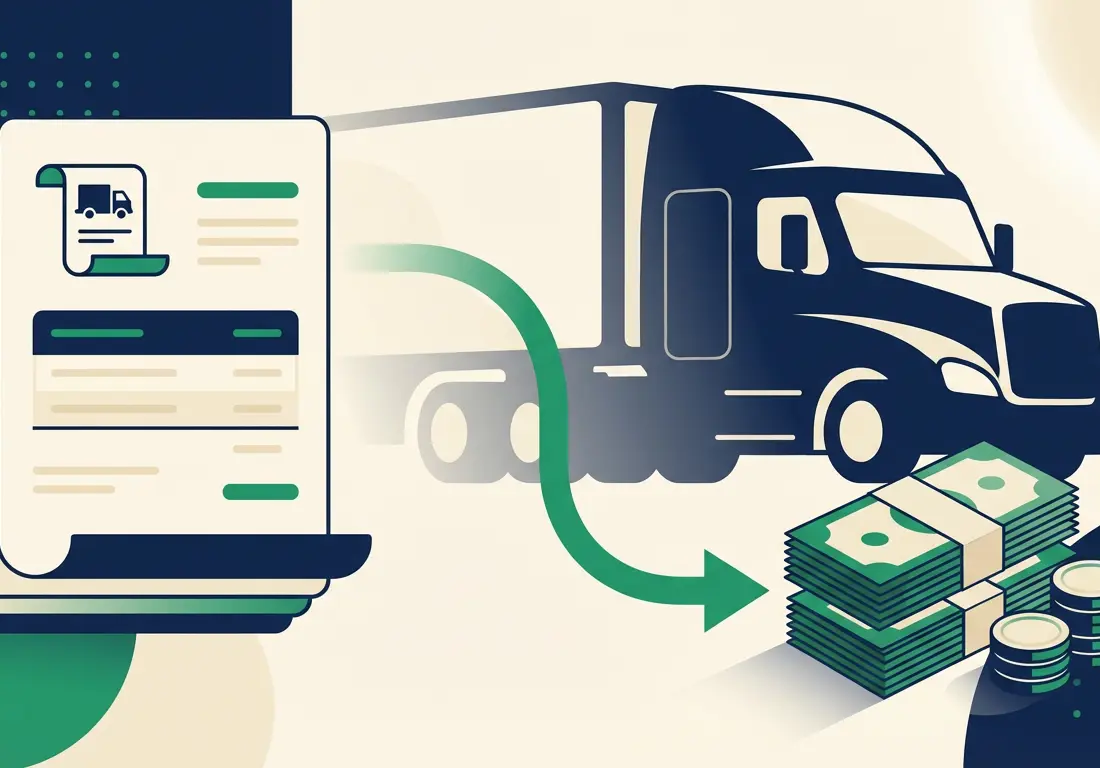
Factoring freight invoices keeps fuel and payroll funded between settlements.
A trucking owner's experience
Daniel from Ohio operates a regional LTL carrier with 23 trucks serving manufacturing clients across the Midwest. When a major customer requested expanded service to new facilities, Daniel needed to add five trucks quickly but faced a common dilemma - the revenue from the expanded contract would easily cover equipment payments, but he needed financing to bridge the gap between purchasing trucks and generating that revenue.
His primary bank offered equipment financing but required a lengthy underwriting process that would have delayed the fleet expansion past the customer's deadline. Through SmarterLends, Daniel connected with a transportation-focused lender who understood the urgency and the underlying economics. The equipment financing closed in under three weeks, and the new trucks entered service before the contract start date.
"The difference was working with people who actually understand trucking," Daniel noted. "They evaluated the customer contract, looked at our existing fleet performance, and moved quickly because they saw what I saw - a solid opportunity backed by committed freight."
Frequently asked Trucking funding questions
Trucking operators consistently raise questions about how financing options compare and what qualification standards apply. Many wonder whether equipment financing or leasing makes more sense for their situation. The answer typically depends on how long they plan to operate specific vehicles and their tax situation. Equipment financing builds equity in owned assets, while leasing may offer lower monthly payments and simplified end-of-term transitions. Companies planning to run trucks for their full useful life generally benefit from ownership, while those preferring newer equipment every few years sometimes find leasing advantages.
Credit requirements vary significantly across funding types. Invoice factoring places primary emphasis on shipper creditworthiness rather than the trucking company's credit profile, making it accessible to newer operations. Equipment financing typically requires personal credit scores in the mid-600s for favorable terms, though some lenders work with lower scores at higher rates. SBA loans generally expect credit scores of 680 or higher along with demonstrated business cash flow.
Owner-operators frequently ask about funding options for their first truck purchase. Those with limited business credit history often find success with equipment financing programs that emphasize the truck's value as collateral. Building relationships with transportation-focused lenders early creates pathways to better terms as the operation grows. Some factoring companies also offer fuel advance programs that help manage cash flow during the critical early months of operation.
Many trucking companies wonder how quickly they can access funding. Invoice factoring provides the fastest turnaround - often same-day or next-day funding once an account is established. Equipment financing typically requires one to four weeks depending on deal complexity and documentation readiness. SBA loans take longer, usually 45 to 90 days from application to funding, reflecting the more extensive underwriting process.
Seasonal businesses operating in sectors like agricultural hauling or construction materials ask about financing structures that accommodate revenue fluctuations. Lines of credit work well for these situations, providing access to capital during peak seasons that can be paid down during slower periods. Some equipment financing programs also offer seasonal payment structures with lower payments during off-peak months.
Take the next step
Trucking companies succeed when they match funding tools to operational realities. Whether you need equipment financing for fleet expansion, invoice factoring to accelerate cash flow, or an SBA loan for major capital investment, the right financing partner understands transportation economics and moves at the pace your business requires.
SmarterLends connects trucking operators with lenders experienced in commercial transportation financing. Complete a single application to compare matched options from multiple funding sources - equipment specialists, factoring companies, and SBA-preferred lenders who understand what keeps trucks moving and revenue flowing.
Editorial standards. SmarterLends is a referral marketing platform and earns compensation when users connect with funding partners. Our industry funding information is editorially independent and grounded in named primary sources (SBA, BLS, Census, Federal Reserve, FDIC). See our Disclosures for details.
Frequently asked questions
Sources(10)
- 1.SBA Loan Maximums in 2026U.S. Small Business Administration · Accessed 2026-04-24
- 2.SBA Loan Rates April 2026NerdWallet · Accessed 2026-04-24
- 3.West Bancorporation Q1 Earnings Call Highlights - Trucking Industry Watch ListTicker Report · Accessed 2026-04-24
- 4.North America Truckload Freight Market UpdateC.H. Robinson · Accessed 2026-04-24
- 5.Equipment Financing Guide: Everything Your Business Needs to Know in 2026Crestmont Capital · Accessed 2026-04-24
- 6.Freight Market Outlook - TruckingGreat American Insurance Group · Accessed 2026-04-24
- 7.Why Credit Card Rate Caps Hurt Consumers, Small BusinessesPayment Week · Accessed 2026-04-24
- 8.Real Success Stories: Invoice Financing for Small Business in ActionInvoice Interchange · Accessed 2026-04-24
- 9.Heavy Duty Trucking - Commercial Truck Fleet NewsHeavy Duty Trucking · Accessed 2026-04-24
- 10.Truckers NewsTruckers News · Accessed 2026-04-24
Funding Estimator
Compare options for your business
Day-to-day operations, payroll, inventory.
Illustrative estimate only. Actual rates, terms, and eligibility depend on your application.
Continue exploring
Funding products
Related questions
Tools & calculators
Ready to see what your business qualifies for?
Check eligibility in minutes. It won't impact your credit score.