


Key takeaways
- SBA 7(a) loans offer up to $5 million with rates capped at Prime + 2.25% to Prime + 4.75% depending on loan size and maturity
- The 504 program finances real estate and equipment through a dual-structure with CDC participation and below-market fixed rates
- Most SBA loans require 2+ years in business, $100,000+ annual revenue, and personal credit scores of 680 or higher
- Funding timelines typically range from 30-90 days due to SBA authorization requirements and collateral documentation
- SBA Lender Match connects borrowers with participating lenders and serves as the official starting point for applications
SBA loans remain the gold standard for small business financing, combining government backing with competitive rates that conventional lenders rarely match. Whether you need working capital, equipment, or commercial real estate, understanding how these programs work helps you secure the right funding structure.
How SBA loans work
The Small Business Administration does not lend money directly. Instead, it guarantees a portion of loans made by approved lenders - banks, credit unions, and Certified Development Companies (CDCs). This guarantee reduces lender risk, enabling them to offer better terms than they would for purely conventional financing.
The 7(a) loan program
The flagship 7(a) program handles most SBA lending volume. Loans up to $5 million fund working capital, equipment purchases, debt refinancing, and business acquisitions. The SBA guarantees up to 85% on loans of $150,000 or less and 75% on larger amounts.
Under SOP 50 10 8 - the current Standard Operating Procedure governing 7(a) origination - lenders must verify that borrowers have exhausted personal resources and cannot obtain credit elsewhere on reasonable terms. This "credit elsewhere" test remains central to eligibility determinations.
The 504 loan program
The 504 program targets major fixed asset purchases, particularly commercial real estate and heavy equipment. These loans use a unique structure: a conventional bank provides 50% of financing, a CDC provides up to 40% with SBA backing, and the borrower contributes 10% equity.
This structure delivers below-market fixed rates on the CDC portion, making 504 loans particularly attractive for owner-occupied real estate. Maximum 504 project size reaches $5.5 million for standard projects and higher for manufacturing and energy efficiency projects.
SBA Lender Match
The SBA Lender Match portal serves as the official front door for borrowers seeking SBA financing. After completing a brief questionnaire, the system connects you with participating lenders in your area who handle your loan type and size range. This free service eliminates cold-calling banks that may not participate in SBA programs.
Typical costs and terms
SBA loan pricing follows regulated caps tied to the Prime rate. Lenders cannot exceed these maximums, though they may offer lower rates to strong borrowers.
| Loan Type | Maximum Rate | Typical Term | Maximum Amount | SBA Guarantee Fee |
|---|---|---|---|---|
| 7(a) under $25K | Prime + 4.25% | Up to 10 years | $25,000 | 0% |
| 7(a) $25K-$50K | Prime + 3.25% | Up to 10 years | $50,000 | 0% |
| 7(a) $50K-$250K | Prime + 2.75% | Up to 10 years | $250,000 | 2.0% |
| 7(a) $250K-$500K | Prime + 2.75% | Up to 25 years | $500,000 | 3.0% |
| 7(a) $500K-$5M | Prime + 2.25% | Up to 25 years | $5,000,000 | 3.5% on guaranteed portion |
| 504 (CDC portion) | Fixed, below Prime | 10 or 20 years | $5,500,000+ | 1.5% CDC fee |
With the Prime rate fluctuating based on Federal Reserve actions, effective APRs on 7(a) loans currently range from approximately 11% to 15% for most borrowers. The 504 program's fixed-rate CDC portion often delivers rates 1-2 percentage points below comparable conventional financing.
SBA guarantee fees represent a significant cost component. On a $1 million 7(a) loan with 75% guarantee, the 3.5% fee applies to the $750,000 guaranteed portion - adding $26,250 to closing costs. Many lenders roll this fee into the loan balance.

SBA 7(a) for working capital; 504 for real estate and major equipment.
Who qualifies
SBA eligibility combines federal program requirements with individual lender underwriting standards. Meeting SBA minimums does not guarantee approval - lenders apply their own credit policies on top of program rules.
| Requirement | SBA Minimum | Typical Lender Standard |
|---|---|---|
| Time in business | Varies by program | 2+ years preferred |
| Annual revenue | No hard minimum | $100,000+ typical |
| Personal credit score | No SBA minimum | 680+ for most lenders |
| Business credit | Not specified | Established trade lines helpful |
| Collateral | Required when available | Real property or equipment |
| Personal guarantee | Required from 20%+ owners | All owners must guarantee |
| Citizenship | U.S. citizens or permanent residents | Valid documentation required |
Underwriting standards tightened during 2024-2025 as lenders responded to economic uncertainty. Borrowers should expect deeper documentation requests, particularly around cash flow verification and collateral valuation. The most recent Federal Reserve Small Business Credit Survey indicates approval rates remain below pre-pandemic levels for smaller firms.
- APR Low
- APR High
For 7(a) loans, collateral is required to the extent it is available, though the SBA does not decline loans solely for lack of collateral. Lenders must take available collateral but cannot require borrowers to pledge assets that would jeopardize business operations.
SBA loans vs alternatives
SBA financing competes with other business loan products available through SmarterLends. Your optimal choice depends on funding timeline, total cost tolerance, and qualification profile.
| Factor | SBA 7(a) | Term Loans | Business Lines of Credit |
|---|---|---|---|
| Typical APR range | 11%-15% | 8%-30% | 10%-25% |
| Maximum amount | $5,000,000 | $500,000-$5,000,000 | $250,000-$1,000,000 |
| Repayment term | Up to 25 years | 1-5 years | Revolving |
| Time to funding | 30-90 days | 1-14 days | 1-7 days |
| Collateral required | When available | Often required | Sometimes required |
| Best for | Long-term growth, real estate | Equipment, expansion | Working capital, inventory |
SBA loans deliver the lowest rates and longest terms but require patience. Conventional term loans fund faster with less paperwork. Business lines of credit provide revolving access for ongoing working capital needs without reapplying for each draw.
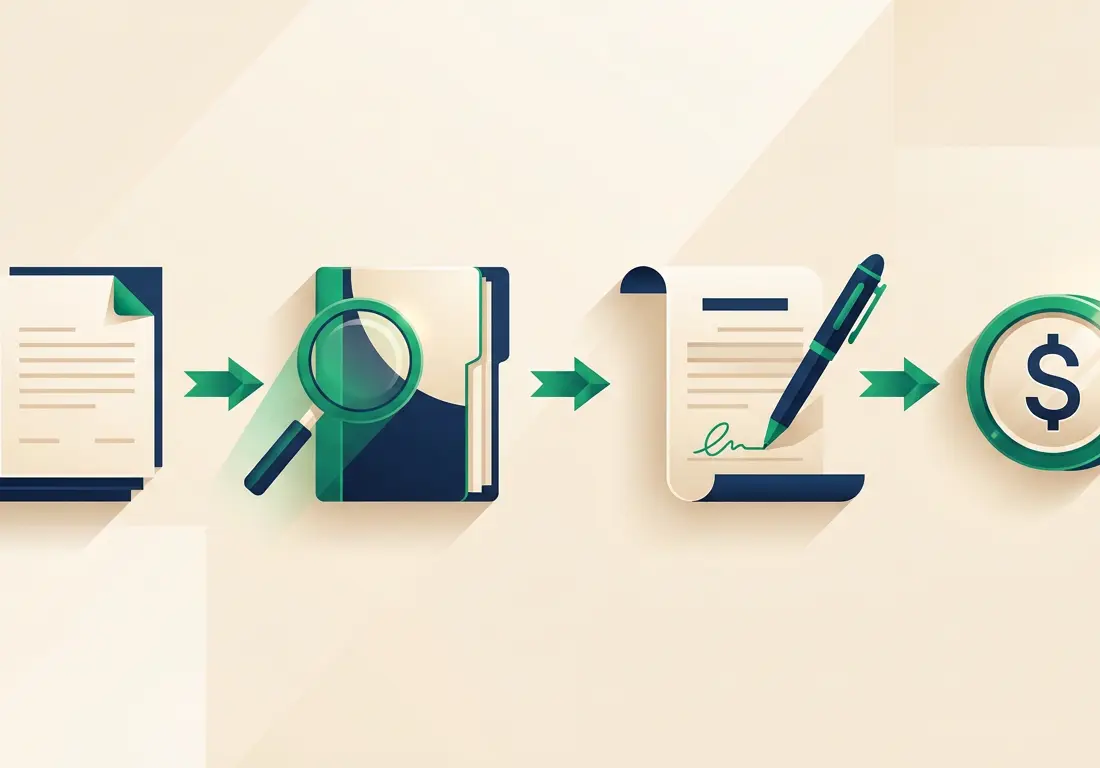
A typical SBA loan moves through four stages over 30–90 days.
When SBA loans are the right fit
SBA financing makes sense when lower rates and longer terms outweigh the extended approval timeline and documentation burden.
Commercial real estate acquisition
The 504 program shines for owner-occupied real estate purchases. The 10% down payment requirement (versus 20-30% for conventional commercial mortgages) preserves working capital while locking in fixed rates on the CDC portion. A restaurant expanding to a second location or a manufacturer buying its facility finds substantial savings over a standard commercial mortgage.
Major equipment investments
Capital-intensive businesses benefit from matching 7(a) loan terms to equipment useful life. A printing company financing a $500,000 press can spread payments over 10 years rather than the 3-5 year terms typical of equipment financing. Monthly payments drop significantly even if rates are similar.
Business acquisition
SBA loans fund business purchases including goodwill and intangible assets that conventional lenders often refuse to finance. A buyer acquiring an established plumbing company can finance the customer list, brand value, and seller training period alongside physical assets.
Debt consolidation
Businesses carrying high-rate debt from online lenders or merchant cash advances use 7(a) refinancing to slash interest costs. Consolidating $300,000 in short-term debt at 30% into a 10-year SBA loan at 13% dramatically improves cash flow.
Startup financing (with caveats)
While traditional SBA loans favor established businesses, the SBA Express program and certain Community Advantage lenders work with newer companies. Strong personal credit, relevant industry experience, and substantial owner equity injection improve startup approval odds.
Market data
SBA lending volume provides insight into small business financing trends and lender appetite.
The most recent SBA data shows 7(a) approvals reached $31.1 billion in fiscal year 2024, with average loan sizes continuing to climb as lenders focused on larger, lower-risk transactions. Default rates vary significantly by lender - top performers like Live Oak Bank maintain trailing 12-month default rates around 2%, well below the program average exceeding 4%.
| Metric | Value | Source |
|---|---|---|
| Average 7(a) loan size | $479,000 | SBA Lender Activity Reports |
| Median processing time | 45-60 days | SBA |
| Program-wide default rate | 4%+ | SBA portfolio data |
| Top lender default rate | ~2% | Live Oak investor disclosures |
Lender selectivity increased through 2024-2025, with many SBA lenders tightening minimum revenue and credit thresholds. Borrowers with strong profiles continue finding competitive terms, while marginal applicants face more rejections or requests for additional collateral.
How to apply
Securing an SBA loan requires preparation and patience. Following a structured process improves approval odds and accelerates funding.
Assess your eligibility - Verify your business meets SBA size standards for your industry (generally under $8 million to $41.5 million in average annual receipts depending on NAICS code). Confirm you operate for profit in the United States and have invested equity.
Gather documentation - Prepare three years of business tax returns, current profit and loss statements, balance sheets, personal financial statements for all 20%+ owners, business licenses, and a debt schedule showing existing obligations.
Start with SBA Lender Match - Register at the SBA's official Lender Match portal. Complete the questionnaire about your business, funding needs, and timeline. The system connects you with participating lenders within 48 hours.
Compare lender offers - Different lenders specialize in different loan sizes, industries, and structures. Some focus on 7(a), others on 504. Evaluate rate quotes, fee structures, and estimated timelines from multiple sources.
Submit your formal application - Work with your chosen lender to complete SBA Form 1919 and supporting documentation. Respond promptly to information requests - delays at this stage extend your timeline significantly.
Complete SBA authorization - Your lender submits the package to SBA for guarantee authorization (or processes internally if they hold delegated authority). This step typically takes 5-10 business days for PLP lenders.
Close and fund - After SBA authorization, complete closing documentation including collateral filings and personal guarantees. Funds typically disburse within days of closing.
SBA loans reward businesses willing to navigate the process with some of the most competitive financing available. The combination of government backing, capped rates, and extended terms creates genuine value for borrowers who qualify. Start by checking your eligibility through SBA Lender Match, then compare offers from multiple approved lenders to find the best fit for your situation.
Apply now through SmarterLends to get matched with SBA lenders and alternative financing options based on your business profile.
Editorial standards. SmarterLends is a referral marketing platform and earns compensation when users connect with funding partners. Our product information is editorially independent and grounded in named primary sources (regulators, federal agencies, industry trade groups). See our Disclosures for details.
Frequently asked questions
Sources(8)
- 1.7(a) Loan ProgramSmall Business Administration · Accessed 2026-04-24
- 2.SBA Loan Rates April 2026NerdWallet · Accessed 2026-04-24
- 3.Live Oak Q1 2026 slides: EPS surges 94%, AI platform launchesLive Oak Bancshares via Investing.com · Accessed 2026-04-24
- 4.SOP 50 10 - Lender Development Company Loan ProgramsSmall Business Administration · Accessed 2026-04-24
- 5.Lender Activity ReportsSmall Business Administration · Accessed 2026-04-24
- 6.Is SBA moving the small business contracting goal posts?Federal News Network · Accessed 2026-04-24
- 7.Abbott Meets With SBA Administrator Kelly Loeffler to Support Texas Small BusinessesTexas Border Business · Accessed 2026-04-24
- 8.What Is the SBA BOLT Program and How Can It Help My Business?Small Business Trends · Accessed 2026-04-24
Funding Estimator
Compare options for your business
Day-to-day operations, payroll, inventory.
Illustrative estimate only. Actual rates, terms, and eligibility depend on your application.
Continue exploring
Funding products
Related questions
Tools & calculators
Ready to see what your business qualifies for?
Check eligibility in minutes. It won't impact your credit score.