


Key takeaways
- Food services and drinking places represent a significant sector with over $90 billion in monthly sales according to the most recent Census Bureau retail trade data
- SBA 7(a) loans offer up to $5 million with terms reaching 25 years for real estate acquisitions, making them ideal for restaurant expansion
- Equipment financing typically covers 80-100% of commercial kitchen assets with the equipment itself serving as collateral
- Seasonal revenue fluctuations make revolving credit lines particularly valuable for managing payroll and inventory during slower periods
- Restaurant-specific challenges like tight margins and high turnover require lenders experienced in food service cash flow patterns
Running a restaurant requires constant capital investment - from commercial kitchen equipment and tenant improvements to inventory purchases and seasonal staffing. The food service industry operates on notoriously thin margins, often between 3-9%, making access to appropriate financing essential for growth and stability. This guide examines funding options tailored to restaurant operations, typical costs, and strategies for securing approval.
Why restaurant owners choose SmarterLends
Restaurant operators face unique financing challenges that general business lenders may not fully understand. High employee turnover, perishable inventory, seasonal demand swings, and equipment-intensive operations create cash flow patterns that differ markedly from retail or professional services. SmarterLends connects restaurant owners with lenders who specialize in food service businesses and understand these dynamics.
Our marketplace approach lets you compare multiple offers simultaneously rather than applying to lenders one at a time. This matters for restaurants because approval criteria vary significantly - some lenders weight daily credit card receipts heavily, others focus on time in business, and still others specialize in specific restaurant formats like quick-service or fine dining.
According to the U.S. Census Bureau's most recent Monthly Retail Trade report, food services and drinking places generate over $90 billion in monthly sales, reflecting the sector's enormous economic footprint and the substantial capital requirements to operate within it.
Common funding uses for restaurants
Restaurant capital needs span virtually every aspect of operations. The table below outlines typical funding applications and representative cost ranges based on industry standards:
| Funding Use | Typical Cost Range | Notes |
|---|---|---|
| Commercial kitchen equipment | $15,000 - $150,000 | Ovens, refrigeration, prep stations, ventilation |
| Tenant improvements/buildout | $50,000 - $500,000 | Varies dramatically by square footage and concept |
| Point-of-sale systems | $3,000 - $25,000 | Hardware, software, installation, training |
| Inventory and supplies | $5,000 - $50,000 | Initial stocking or seasonal purchasing |
| Working capital/payroll | $25,000 - $250,000 | Bridge funding during slow seasons |
| Marketing and grand opening | $10,000 - $75,000 | Local advertising, promotions, events |
| Outdoor dining expansion | $20,000 - $100,000 | Furniture, weatherproofing, permits |
These ranges represent starting points - actual costs depend on restaurant format, location, and scope. A quick-service concept requires different equipment than a full-service establishment, and urban buildouts typically cost more than suburban locations.

What restaurant operators most often finance.
Recommended funding types
Three financing structures align particularly well with restaurant operations, each addressing different capital needs and repayment capacities.
SBA 7(a) loans for major investments
The SBA 7(a) loan program remains the gold standard for restaurant financing when you need substantial capital with manageable payments. According to the U.S. Small Business Administration, these loans offer amounts up to $5 million with repayment terms extending to 25 years for real estate acquisitions and 10 years for equipment or working capital. The extended terms translate to lower monthly payments, preserving cash flow for operations.
Restaurant owners commonly use SBA 7(a) financing for acquiring existing restaurants, purchasing commercial property, major renovations, or refinancing higher-cost debt. The application process requires more documentation than alternative options - typically two to three years of tax returns, detailed financial projections, and a comprehensive business plan. Approval timelines range from 30 to 90 days depending on lender efficiency and application complexity.
- Max Term Years
Equipment financing for kitchen assets
Commercial kitchen equipment represents a major capital expenditure that equipment financing handles efficiently. This structure uses the equipment itself as collateral, often enabling approval for businesses that might not qualify for unsecured financing. Most equipment loans cover 80-100% of the purchase price with terms matching the expected useful life of the assets - typically five to seven years for major kitchen equipment.
The collateralized nature of equipment financing often results in more competitive rates than unsecured alternatives. Restaurant owners benefit from fixed monthly payments that simplify budgeting, and the equipment generates revenue from day one while you pay it off over time. This approach works well for upgrading aging refrigeration systems, adding cooking capacity for catering operations, or outfitting new locations.
Business lines of credit for operational flexibility
Seasonality affects nearly every restaurant format. Tourism-dependent locations see dramatic swings between peak and off-seasons. Urban lunch spots slow during holiday weeks when office workers travel. Even neighborhood establishments experience predictable monthly fluctuations around paydays and weekends.
A business line of credit provides a flexible capital reserve you can draw against when cash flow tightens and repay when revenue rebounds. Unlike term loans where you receive a lump sum and begin immediate repayment, lines of credit let you access funds as needed and pay interest only on what you actually use. Credit limits typically range from $10,000 to $250,000 based on monthly revenue and time in business.
Restaurant-specific market data
Understanding broader industry trends helps contextualize your funding decisions. The restaurant sector continues demonstrating resilience despite economic pressures, though growth patterns vary by segment.
According to the U.S. Census Bureau's Advance Monthly Sales for Retail and Food Services report, food services and drinking places maintain substantial sales volumes that reflect both consumer demand and the capital-intensive nature of restaurant operations. This data point matters for funding because lenders evaluate individual restaurant performance against industry benchmarks.
The Census Bureau's Business Trends and Outlook Survey provides additional context on small business conditions across sectors, including insights on demand trends and operational challenges that affect funding availability. Restaurants responding to these surveys report varying conditions based on location, concept, and customer base.
Fast-casual concepts have shown particular strength in recent periods, with several major brands demonstrating meaningful same-store sales growth. This segment attracts lender interest because of its hybrid model - lower labor costs than full-service combined with higher check averages than traditional quick-service. If your restaurant operates in this format, emphasize the segment's performance when presenting your funding application.
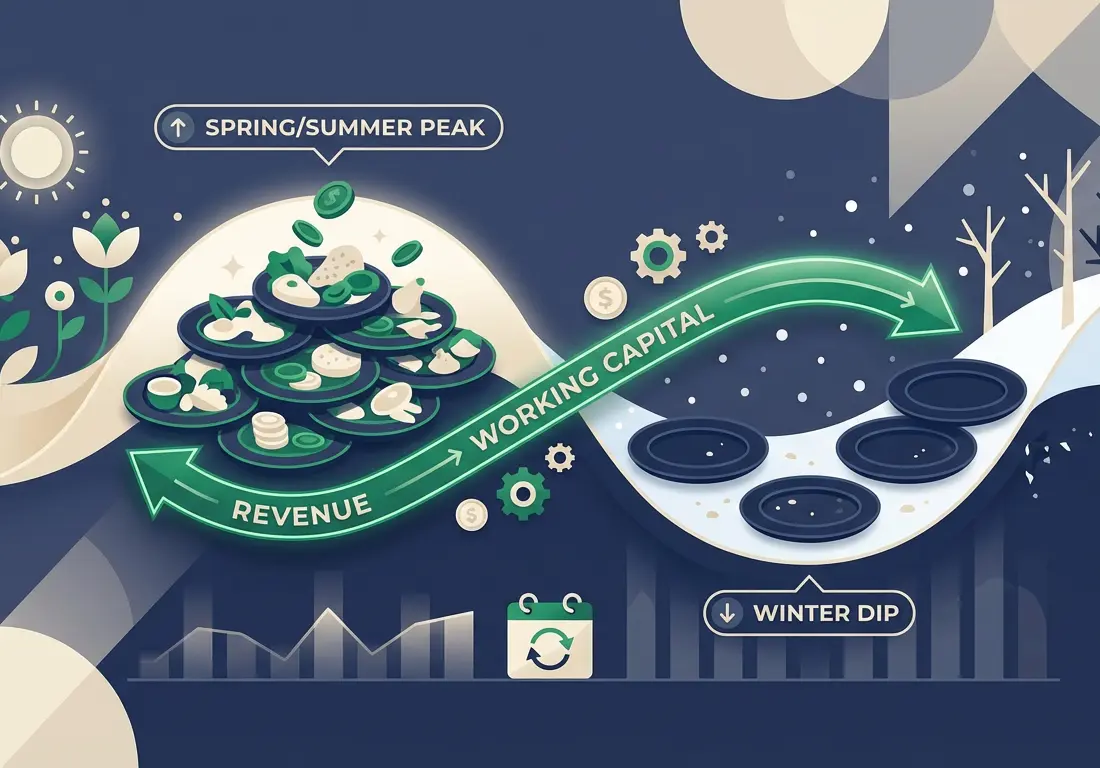
Working capital helps restaurants smooth seasonal revenue swings.
Hypothetical restaurant owner scenario
Consider a hypothetical restaurant owner operating a neighborhood bistro for several years who wants to add a private dining room to capture event business. The expansion requires construction, additional kitchen equipment, and working capital to cover the transition period while maintaining current operations.
This owner might approach the project with a blended funding strategy. An SBA 7(a) loan could cover the construction costs with its longer repayment term, reducing monthly payment pressure. Equipment financing through a separate lender might fund the additional cooking and refrigeration capacity needed to serve larger parties. A modest line of credit could provide working capital cushion during construction disruption.
By matching each funding need to an appropriate product, this hypothetical owner maintains flexibility while keeping overall financing costs reasonable. The key insight: restaurant expansions rarely fit neatly into a single funding category, and experienced restaurant owners often layer multiple products strategically.
Frequently asked restaurant funding questions
Restaurant owners consistently raise several questions when exploring financing options. Understanding these concerns helps frame productive conversations with lenders.
Most lenders prefer restaurants that have operated at least two years with consistent revenue, though some programs accommodate businesses with shorter track records if the owner has relevant industry experience. Newer restaurants may face higher rates or require additional collateral, but funding remains available through lenders who specialize in food service startups.
Credit score requirements vary significantly by product type. SBA loans typically require personal FICO scores of 680 or higher, while some alternative lenders approve restaurant owners with scores in the mid-500s - though at substantially higher rates. Your credit profile matters, but lenders also weight business revenue, time in operation, and existing debt heavily in their decisions.
Collateral expectations differ by funding type. Equipment financing uses the financed equipment as collateral. SBA loans may require business assets and sometimes personal real estate depending on loan size. Unsecured lines of credit and working capital products often require personal guarantees but no specific collateral.
Funding speed ranges from same-day for some working capital products to 90 days or more for SBA loans. If you need capital urgently - perhaps equipment failed unexpectedly or you received a large catering contract requiring immediate inventory purchases - faster alternatives exist but typically carry higher costs. Planning major funding needs in advance lets you access more competitive products.
Seasonal businesses can absolutely qualify for funding, but lenders want to see that you understand your cash flow patterns and have planned for them. Providing trailing 12-month revenue by month demonstrates predictability even when individual months vary significantly. Some lenders offer seasonal payment structures where monthly obligations reduce during your slower periods.
Next steps for restaurant funding
Securing appropriate financing can accelerate your restaurant's growth, help you weather slow seasons, and provide the equipment foundation for excellent food and service. The key is matching your specific needs to funding products designed for those purposes.
SmarterLends simplifies this matching process by presenting multiple offers from lenders who understand restaurant operations. Rather than submitting applications individually and waiting for responses, you can compare terms, rates, and approval likelihood across options simultaneously. Start your comparison today to see what funding your restaurant qualifies for.
Editorial standards. SmarterLends is a referral marketing platform and earns compensation when users connect with funding partners. Our industry funding information is editorially independent and grounded in named primary sources (SBA, BLS, Census, Federal Reserve, FDIC). See our Disclosures for details.
Frequently asked questions
Sources(6)
- 1.7(a) loansU.S. Small Business Administration · Accessed 2026-04-25
- 2.504 loansU.S. Small Business Administration · Accessed 2026-04-25
- 3.Advance Monthly Sales for Retail and Food ServicesU.S. Census Bureau · Accessed 2026-04-25
- 4.Monthly Retail Trade - Sales ReportU.S. Census Bureau · Accessed 2026-04-25
- 5.Business Trends and Outlook Survey Data ReleaseU.S. Census Bureau · Accessed 2026-04-25
- 6.Estimated Monthly Retail Sales, Inventories, and Inventories/Sales RatiosU.S. Census Bureau · Accessed 2026-04-25
Funding Estimator
Compare options for your business
Day-to-day operations, payroll, inventory.
Illustrative estimate only. Actual rates, terms, and eligibility depend on your application.
Continue exploring
Funding products
Related questions
Tools & calculators
Ready to see what your business qualifies for?
Check eligibility in minutes. It won't impact your credit score.