

Key takeaways
- Equipment financing helps home services companies acquire service vehicles, specialized tools, and diagnostic equipment with the asset serving as collateral
- SBA 7(a) loans offer up to $5 million with favorable terms for established home services businesses seeking expansion capital
- Business lines of credit provide flexible access to working capital during seasonal slowdowns common in climate-dependent services
- Home services businesses face distinct cash flow cycles tied to weather patterns, housing market activity, and seasonal demand fluctuations
- Strong revenue documentation and clear equipment valuations strengthen funding applications for service-based operations
Home services encompasses a diverse range of businesses that maintain, repair, and improve residential properties. From HVAC technicians and plumbers to landscapers, cleaning services, and pest control operators, these businesses share common funding challenges including equipment-intensive operations, seasonal revenue patterns, and the need for reliable service vehicles. Understanding how different financing products address these specific operational needs helps home services owners make informed capital decisions.
Why Home Services owners choose SmarterLends
Home services businesses operate in a competitive landscape where response time and service quality directly impact revenue. SmarterLends connects owners with lenders who understand the equipment-heavy, mobile nature of these operations. Rather than navigating dozens of individual lender applications, home services owners can compare multiple offers through a single platform, seeing transparent terms for everything from vehicle financing to working capital lines.
The platform recognizes that a plumbing company's financing needs differ substantially from a residential cleaning service or a landscaping operation. By matching businesses with lenders experienced in their specific trade, SmarterLends helps owners avoid generic lending products that fail to account for industry-specific cash flow patterns or collateral considerations.
Common funding uses for Home Services
Home services businesses deploy capital across several predictable categories tied to their operational models.
| Funding Use | Typical Cost Range | Common Financing Approach |
|---|---|---|
| Service vehicles (vans, trucks) | $35,000 - $85,000 | Equipment financing, SBA 7(a) |
| Diagnostic and specialty tools | $5,000 - $25,000 | Equipment financing, term loan |
| Heavy equipment (landscaping, excavation) | $50,000 - $200,000 | Equipment financing, SBA 504 |
| Seasonal inventory buildup | $10,000 - $50,000 | Business line of credit |
| Marketing and customer acquisition | $5,000 - $30,000 | Working capital loan, line of credit |
| Technician training and certification | $2,000 - $15,000 | Term loan, working capital |
| Facility expansion or warehouse space | $100,000 - $500,000 | SBA 7(a), SBA 504, commercial mortgage |
Service vehicles represent the largest recurring capital expenditure for most home services operations. Unlike retail businesses that can operate from a fixed location, home services companies depend on reliable transportation to generate revenue.
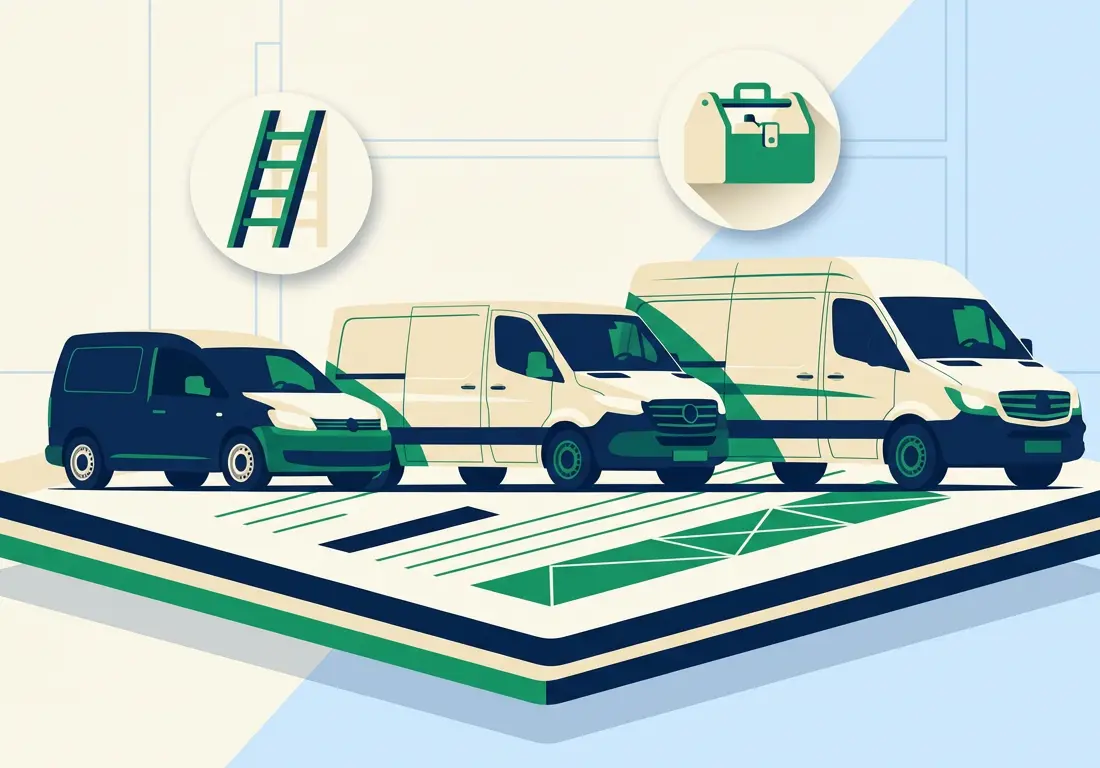
Vehicle and fleet financing is the largest capital category for home service trades.
Recommended funding types
Equipment financing
Equipment financing aligns naturally with home services operations because the financed asset—whether a service van, HVAC installation equipment, or landscaping machinery—serves as collateral for the loan. This secured structure often translates to more accessible approval requirements and competitive rates compared to unsecured financing options.
For home services businesses, equipment financing typically covers 80-100% of the purchase price with terms ranging from two to seven years depending on the expected useful life of the asset. A plumbing company financing a new service van might secure a five-year term, while a landscaping business purchasing a commercial mower might see a three-year term reflecting the equipment's faster depreciation.
SBA 7(a) loans
The SBA 7(a) program offers established home services businesses access to substantial capital with favorable terms. According to the program guidelines published by the U.S. Small Business Administration, 7(a) loans can reach up to $5 million and cover a broad range of uses including working capital, equipment purchases, real estate acquisition, and business expansion.
These loans typically feature longer repayment terms—up to 10 years for equipment and working capital, up to 25 years for real estate—which keeps monthly payments manageable relative to the loan amount. The government guarantee reduces lender risk, often resulting in lower interest rates than conventional business loans.
Business line of credit
Seasonal revenue patterns make lines of credit particularly valuable for home services operations. An HVAC company may see revenue surge during summer cooling season and winter heating installations, with slower periods during mild weather months. A landscaping business faces the inverse challenge in regions with cold winters.
A revolving credit line allows owners to draw funds during slow periods to cover payroll, vehicle maintenance, and fixed costs, then repay as seasonal revenue returns. This flexibility costs less than term loan interest when used strategically, since charges apply only to the drawn balance rather than a full loan amount.
Home Services-specific market data
The home services sector operates within the broader construction and maintenance economy, with employment patterns tracked across several industry classifications.
Regional economic shifts directly impact home services demand. According to the U.S. Bureau of Labor Statistics, the Washington, DC metropolitan area lost 103,900 jobs from January 2025 to January 2026, illustrating how broader employment trends can affect local housing activity and consequently home services demand (BLS Metropolitan Area Employment and Unemployment, 2026 release).
The residential services market depends heavily on housing market health. The U.S. Census Bureau population estimates show continued growth in many metropolitan areas, which generally supports demand for home maintenance and improvement services over time (U.S. Census Bureau Population Clock, 2026).
- Cost Low
- Cost High
Home services businesses seeking disaster recovery support can access specialized programs. The U.S. Small Business Administration offers disaster loans to small businesses and private nonprofits affected by declared disasters, with loan amounts and terms set based on each applicant's financial condition (SBA Disaster Relief announcement, April 2026).

Working capital frequently funds digital marketing and lead-gen ramp.
Illustrative owner scenario
Consider a hypothetical home services owner who operates an HVAC installation and repair company. The business has grown steadily over several years, building a reputation for reliable emergency service and quality installations. As customer demand increases, the owner faces a familiar challenge: the existing service vehicles have accumulated significant mileage and require increasingly frequent repairs.
To maintain service quality and response times, the owner researches funding options for fleet expansion. Equipment financing emerges as a natural fit—the vehicles themselves secure the loans, and the financing terms align with the expected useful life of commercial service vans. For longer-term expansion plans including a larger warehouse facility, an SBA 7(a) loan offers the combination of capital access and manageable payment structure needed for real estate acquisition.
This hypothetical illustrates how home services businesses often layer multiple financing products to address different operational needs, using equipment financing for asset purchases while reserving SBA or conventional term loans for larger strategic investments.
Frequently asked Home Services funding questions
Home services owners frequently ask how their seasonal revenue patterns affect loan approval. Lenders experienced with this industry understand that revenue concentration during peak seasons is normal, not a warning sign. Providing two to three years of financial statements demonstrates consistent year-over-year performance even when month-to-month revenue varies substantially. Many lenders evaluate annual cash flow rather than monthly snapshots when assessing home services applications.
Another common question concerns how quickly funds become available. Equipment financing often moves fastest because the collateral is clearly defined—approval and funding can occur within days for straightforward vehicle purchases. SBA loans involve more documentation and review, typically requiring several weeks from application to funding. Lines of credit fall somewhere between, with initial approval taking one to three weeks but subsequent draws available immediately once the facility is established.
Owners also ask whether they need to own real estate to qualify for business funding. While real estate can strengthen an application by providing additional collateral, it is not required for most home services financing. Equipment financing relies on the purchased asset as collateral. Working capital loans and lines of credit evaluate business cash flow and creditworthiness. Even SBA 7(a) loans can be approved without real estate collateral when the business demonstrates sufficient cash flow to support repayment.
Finally, home services owners wonder whether they can finance used equipment. Many equipment financing programs accommodate used asset purchases, though terms may differ from new equipment financing. Lenders typically require an independent valuation of used equipment and may offer shorter terms reflecting the asset's remaining useful life. For service vehicles, financing used commercial vans is common practice in the industry.
Ready to explore funding options matched to your home services operation? SmarterLends connects HVAC contractors, plumbers, landscapers, cleaning services, and other home services businesses with lenders who understand your industry. Compare offers for equipment financing, SBA loans, and working capital solutions through a single application—then choose the terms that fit your business goals.
Editorial standards. SmarterLends is a referral marketing platform and earns compensation when users connect with funding partners. Our industry funding information is editorially independent and grounded in named primary sources (SBA, BLS, Census, Federal Reserve, FDIC). See our Disclosures for details.
Frequently asked questions
Sources(6)
- 1.7(a) loansU.S. Small Business Administration · Accessed 2026-04-26
- 2.504 loansU.S. Small Business Administration · Accessed 2026-04-26
- 3.SBA Offers Disaster Relief to Virginia Small Businesses and Private Nonprofits Affected by DroughtU.S. Small Business Administration · Accessed 2026-04-26
- 4.Washington, DC, metropolitan area lost 103,900 jobs from January 2025 to January 2026U.S. Bureau of Labor Statistics · Accessed 2026-04-26
- 5.U.S. and World Population ClockU.S. Census Bureau · Accessed 2026-04-26
- 6.Median weekly earnings $1,098 for women, $1,362 for men, first quarter 2026U.S. Bureau of Labor Statistics · Accessed 2026-04-26
Funding Estimator
Compare options for your business
Day-to-day operations, payroll, inventory.
Illustrative estimate only. Actual rates, terms, and eligibility depend on your application.
Continue exploring
Funding products
Related questions
Tools & calculators
Ready to see what your business qualifies for?
Check eligibility in minutes. It won't impact your credit score.