

Key takeaways
- Equipment financing lets auto shops acquire lifts, diagnostic scanners, and alignment machines while preserving working capital for parts inventory
- Business lines of credit bridge the gap between completing repairs and collecting payment from insurance companies or fleet accounts
- SBA 7(a) loans offer competitive rates for facility expansion or major equipment purchases with terms up to 25 years
- Seasonal demand fluctuations make flexible funding essential for managing payroll during slower winter months
- The retail motor vehicle and parts dealer sector represents a substantial segment tracked by Census Bureau retail sales data
Auto repair shops face a unique set of financial pressures that distinguish them from other service businesses. Between managing parts inventory, investing in increasingly sophisticated diagnostic equipment, and bridging payment gaps with insurance companies and fleet accounts, shop owners need funding solutions that align with the rhythms of their industry.
Why Auto Repair owners choose SmarterLends
Modern auto repair demands continuous investment in technology and equipment. Vehicles now contain advanced driver-assistance systems, hybrid powertrains, and complex electronics that require specialized diagnostic tools and trained technicians. SmarterLends connects shop owners with funding partners who understand these capital requirements and can structure financing around seasonal cash flow patterns.
Our platform evaluates multiple funding options simultaneously, presenting side-by-side comparisons of rates, terms, and approval requirements. Whether you need to finance a new four-post lift, bridge a cash flow gap while waiting on insurance reimbursements, or expand into an adjacent bay, you can compare options tailored to automotive service operations.
The retail sector that includes motor vehicle and parts dealers represents a significant component of monthly economic activity tracked by the U.S. Census Bureau through their Monthly Retail Trade survey (Census Bureau Monthly Retail Trade Report, 2026).
Common funding uses for Auto Repair
| Funding Use | Typical Investment Range | Business Impact |
|---|---|---|
| Diagnostic equipment and scanners | $5,000 - $25,000 | Service modern vehicles with ADAS and hybrid systems |
| Vehicle lifts and alignment racks | $15,000 - $75,000 | Increase throughput and expand service capabilities |
| Parts inventory expansion | $10,000 - $50,000 | Reduce customer wait times and capture more repairs |
| Facility renovation or expansion | $50,000 - $500,000 | Add service bays or specialty areas |
| Payroll bridge during slow periods | $5,000 - $30,000 | Retain skilled technicians through seasonal dips |
| Fleet account receivables gap | $10,000 - $100,000 | Cover costs while awaiting corporate payments |
| Marketing and customer acquisition | $2,500 - $15,000 | Build local visibility and digital presence |
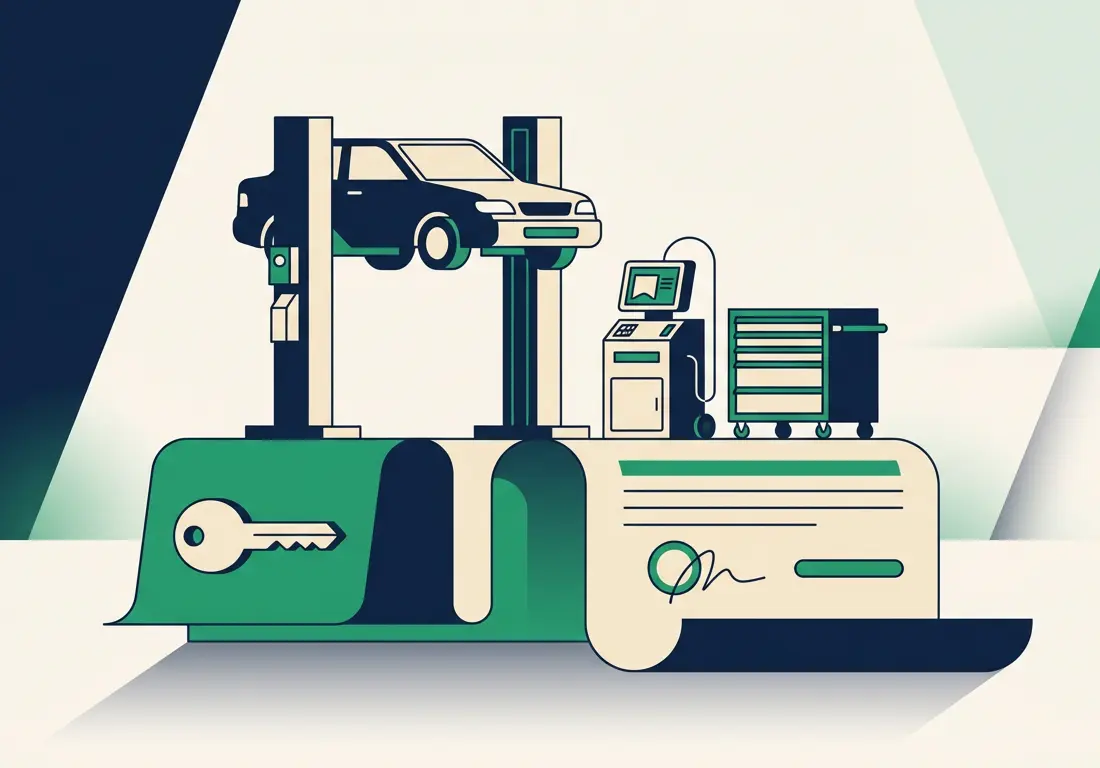
Lifts, diagnostic scanners, and alignment racks are the top financed assets.
Recommended funding types
Equipment Financing
Equipment financing stands out as particularly well-suited for auto repair operations. Lifts, tire changers, wheel balancers, and diagnostic systems all qualify as collateral, which typically results in more favorable approval terms. The equipment itself secures the loan, allowing shops to preserve working capital for inventory and payroll.
Modern diagnostic equipment can cost tens of thousands of dollars, and vehicle manufacturers increasingly require dealer-level scan tools for proper service. Equipment financing spreads these costs over the useful life of the asset, matching monthly payments to the revenue the equipment generates.
Business Lines of Credit
The repair cycle creates natural cash flow gaps. A shop completes work, submits an invoice to an insurance company or fleet account, and waits days or weeks for payment while still needing to pay parts suppliers and technicians. A business line of credit provides revolving access to working capital that can smooth these gaps.
Lines of credit also help manage seasonal fluctuations. Many shops experience slower traffic during winter months when customers defer non-essential maintenance, then see surges in spring as drivers prepare for summer travel. Drawing on a credit line during slow periods and repaying during busy seasons keeps operations stable.
SBA 7(a) Loans
For major investments like facility expansion, real estate acquisition, or comprehensive shop renovations, SBA 7(a) loans offer competitive rates and extended terms that reduce monthly payment burdens. According to the U.S. Small Business Administration, these loans can reach up to $5 million with repayment terms extending to 25 years for real estate (SBA 7(a) Loan Program, 2026).
The SBA 504 loan program provides another avenue for shops planning significant fixed-asset investments, offering long-term, fixed-rate financing specifically designed for major equipment and real estate purchases (SBA 504 Loan Program, 2026).
Auto Repair-specific market data
The automotive repair and maintenance sector operates within the broader retail trade category that the Census Bureau monitors through monthly statistical releases. The most recent Monthly Retail Trade report captures sales activity across motor vehicle and parts dealers, providing insight into the economic environment affecting auto repair demand (Census Bureau Monthly Retail Trade Report, 2026).
- Low
- High
Repair shop revenue correlates closely with vehicle miles traveled and the age of the vehicle fleet. As vehicles age, they require more maintenance and repair, creating steady demand for service operations. Economic conditions influence how quickly consumers trade in aging vehicles versus maintaining their current transportation.
The Federal Reserve monitors broader economic conditions that affect small business lending environments, including interest rate movements and credit availability that directly impact funding costs for shop owners (Federal Reserve Recent Postings, 2026).

Parts inventory and tech payroll dominate auto shop working capital needs.
Illustrative owner example
Consider a hypothetical auto repair owner operating a three-bay independent shop in a suburban market. The business has built a steady customer base over several years, with a mix of walk-in retail customers and a growing fleet maintenance contract with a local delivery company.
The owner faces a common challenge: the fleet contract provides reliable volume but extends payment terms, creating a cash flow gap between completing repairs and receiving payment. Meanwhile, the shop needs to upgrade its diagnostic capabilities to service newer vehicles entering the local market.
This hypothetical scenario illustrates how combining an equipment financing arrangement for the diagnostic upgrade with a business line of credit for working capital management addresses both immediate and ongoing capital needs. The equipment financing preserves cash while adding revenue-generating capability, and the line of credit smooths payment timing on fleet accounts.
Frequently asked Auto Repair funding questions
How quickly can an auto repair shop get funding?
Timelines vary by funding type. Equipment financing and business lines of credit can sometimes fund within days of approval, particularly when the shop has strong financials and clear equipment specifications. SBA loans involve more documentation and typically take several weeks to close, reflecting their lower rates and government backing.
What documentation do lenders typically require from auto shops?
Most funders want to see recent tax returns, bank statements showing cash flow patterns, a profit and loss statement, and information about existing debts. Equipment financing applications also require specifications and pricing for the equipment being purchased. Shops with fleet contracts may be asked to provide copies of service agreements.
Can newer auto repair businesses qualify for funding?
Yes, though options may be more limited than for established shops. Equipment financing often works well for newer businesses because the equipment serves as collateral. Revenue-based financing and merchant cash advances may also be available for shops with strong recent sales, even without extended operating history.
How does seasonality affect funding decisions?
Lenders familiar with the auto repair industry understand seasonal patterns and typically evaluate annualized revenue rather than focusing on any single slow month. Being prepared to explain your seasonal cycle and demonstrate consistent year-over-year performance helps during the application process. Some shop owners time their funding applications to coincide with strong seasonal periods when financials look most favorable.
What credit score do auto repair shops need?
Requirements vary significantly by funding type. Equipment financing and lines of credit from alternative lenders may approve scores in the mid-600s with compensating factors like strong revenue. SBA loans typically expect scores of 680 or higher. The shop's business credit profile and cash flow often matter as much as personal credit scores.
Auto repair shops operate in a capital-intensive environment where the right funding structure directly impacts competitiveness and profitability. Whether you need to upgrade diagnostic equipment, bridge fleet payment gaps, or expand your facility, comparing options through SmarterLends helps you find funding that fits your operational reality. Start your comparison today to see what you qualify for.
Editorial standards. SmarterLends is a referral marketing platform and earns compensation when users connect with funding partners. Our industry funding information is editorially independent and grounded in named primary sources (SBA, BLS, Census, Federal Reserve, FDIC). See our Disclosures for details.
Frequently asked questions
Sources(6)
- 1.SBA 7(a) LoansU.S. Small Business Administration · Accessed 2026-04-26
- 2.SBA 504 LoansU.S. Small Business Administration · Accessed 2026-04-26
- 3.Monthly Retail Trade - Sales ReportU.S. Census Bureau · Accessed 2026-04-26
- 4.Federal Reserve Board - Recent PostingsFederal Reserve · Accessed 2026-04-26
- 5.Business Loan Rates 2026: What to Expect and How to Qualify for Lower RatesBusiness.com · Accessed 2026-04-26
- 6.10 Effective Ways to Reduce Capital Gains Tax for Small Business OwnersSteinke and Company · Accessed 2026-04-26
Funding Estimator
Compare options for your business
Day-to-day operations, payroll, inventory.
Illustrative estimate only. Actual rates, terms, and eligibility depend on your application.
Continue exploring
Funding products
Related questions
Tools & calculators
Ready to see what your business qualifies for?
Check eligibility in minutes. It won't impact your credit score.