


Key takeaways
- SBA offers multiple veteran-specific loan programs with reduced fees and favorable terms
- Service-disabled veteran-owned businesses qualify for additional funding advantages
- Military experience counts as business qualification for many lending programs
- Federal contracting opportunities provide revenue streams that strengthen loan applications
- Veteran business networks offer mentorship alongside funding connections
Veterans bring exceptional skills to entrepreneurship - discipline, leadership, strategic thinking, and the ability to perform under pressure. The business funding landscape recognizes these qualities, offering specialized programs that honor military service while providing the capital veterans need to build successful companies.
In 2026, veteran-owned businesses represent over 2.4 million enterprises in the United States, contributing significantly to the economy. Whether you served in the Army, Navy, Air Force, Marines, Coast Guard, or Space Force, your military background opens doors to funding opportunities specifically designed for those who served.
Funding Programs Available to Veteran-Owned Businesses
SBA Veteran Advantage Programs
The Small Business Administration offers several programs specifically benefiting veteran entrepreneurs. The SBA Express loan program provides expedited processing for veterans, with loans up to $500,000 featuring faster approval times than standard SBA loans.
Veterans also benefit from reduced SBA guarantee fees. For loans under $1 million, veterans typically pay lower upfront guarantee fees compared to non-veteran borrowers. This can translate to thousands of dollars in savings over the life of a loan.
The Community Advantage program expands SBA lending through mission-focused lenders who specifically serve veteran communities. These lenders often provide additional support services alongside capital.
Service-Disabled Veteran-Owned Small Business Programs
Veterans with service-connected disabilities qualify for enhanced benefits. The Service-Disabled Veteran-Owned Small Business designation opens access to federal contracting set-asides, which create predictable revenue streams that strengthen loan applications.
Many lenders offer preferential terms for SDVOSB-certified businesses, recognizing that federal contract revenue provides stable repayment capacity. Interest rates may be reduced by 0.25% to 0.5% for verified service-disabled veteran owners.
Veteran-Focused Grants
Unlike loans, grants do not require repayment. Several organizations offer grants specifically for veteran entrepreneurs:
- StreetShares Foundation provides grants up to $15,000 for veteran-owned businesses through competitive application processes
- The Veterans Business Fund offers microloans and grants for startup costs
- State-level veteran business programs often include grant components for qualifying businesses
Military Transition Programs
Recently separated service members have access to transition assistance that includes business funding guidance. The Boots to Business program, offered through the SBA, provides entrepreneurship training that positions veterans for successful funding applications.
Veterans within two years of separation may qualify for special consideration from lenders who recognize military income documentation and security clearance status as positive factors.
Community Development Financial Institutions
CDFIs serving veteran communities offer alternative funding with flexible underwriting. These mission-driven lenders consider military experience, leadership roles, and service accomplishments when evaluating applications - factors that traditional lenders might overlook.
Eligibility Specifics
Veteran Status Verification
To qualify for veteran-specific programs, you must provide proof of military service. Accepted documentation includes:
- DD-214 discharge papers showing honorable or general discharge
- VA health care enrollment documentation
- Veterans Affairs identification card
- Verification through the VA's online verification system
Reserve and National Guard members who completed their service obligations typically qualify for veteran programs. Active duty service members may access certain programs through military-specific lenders.
Business Ownership Requirements
Most veteran business programs require that veterans own at least 51% of the business. For partnerships, the combined veteran ownership must meet this threshold. The veteran owner must also control daily business operations and make long-term decisions.
SDVOSB certification requires additional documentation proving the service-connected disability and the veteran's role in business management.
Business Eligibility Criteria
Veteran-specific programs maintain standard business requirements:
- Business must operate legally in the United States
- Owner must have no recent bankruptcies or defaults on federal loans
- Business cannot be engaged in prohibited industries
- For SBA programs, business must meet size standards for its industry
Startups and established businesses both qualify, though funding amounts and terms vary based on business history and revenue.
SBA Veterans Advantage waives certain fees on qualifying loans.
Real-World Examples
Example 1: Former Army Logistics Officer Launches Supply Chain Company
Marcus Thompson served 12 years as an Army logistics officer before launching Thompson Supply Solutions in Atlanta. His military experience managing complex supply chains translated directly to his business model serving regional manufacturers.
Marcus applied for an SBA Express loan, using his DD-214 and a business plan highlighting his military logistics certifications. His 10 years of supply chain management experience - all in the Army - counted toward lender experience requirements. He secured $275,000 at 8.5% interest with reduced SBA fees, using the capital to purchase inventory management software and lease warehouse space. Within 18 months, his company won a $1.2 million contract with a defense subcontractor.
Example 2: Navy Veteran Opens Cybersecurity Consulting Firm
Sarah Chen spent eight years as a Navy cryptologic technician before earning her SDVOSB certification and launching SecureVet Consulting in San Diego. Her service-connected hearing loss qualified her for service-disabled veteran programs.
Sarah combined a $10,000 veteran business grant with a $50,000 CDFI loan to fund her startup. The CDFI recognized her Top Secret security clearance and Navy cybersecurity training as significant qualifications. Her SDVOSB status helped her win GSA schedule contracts, generating $340,000 in first-year revenue. She has since expanded to employ four other veterans.
Example 3: Marine Corps Veteran Expands Fitness Franchise
David Morales opened his first fitness studio in Phoenix after completing 20 years in the Marine Corps. Two years later, with proven revenue and membership growth, he sought expansion capital for a second location.
David qualified for $400,000 through the SBA Veterans Advantage program. His Marine Corps retirement income provided additional repayment assurance for lenders. The loan funded build-out of his second location and equipment purchases. His military discipline in maintaining detailed financial records made the application process straightforward, with approval in just three weeks.
Frequently Asked Questions
Do I need combat experience to qualify for veteran business funding?
No, combat experience is not required. Any veteran with an honorable or general discharge qualifies for veteran business programs regardless of their military occupational specialty or deployment history. Your service itself - whether stateside or overseas - meets the veteran qualification.
Can veteran spouses access veteran business funding programs?
Some programs extend benefits to veteran spouses, particularly surviving spouses of service members who died in service or from service-connected disabilities. However, most veteran-specific loan programs require the veteran to be the primary business owner. Spouses may still benefit from family business structures where the veteran maintains majority ownership.
How does my VA disability rating affect business funding options?
Veterans with any service-connected disability rating can pursue SDVOSB certification, which opens federal contracting opportunities and preferential lending terms. Higher disability ratings do not necessarily mean more funding - the certification itself provides the business advantages.
What if I received a less-than-honorable discharge?
Discharge status affects eligibility for most veteran programs. General discharges under honorable conditions typically qualify for SBA veteran programs. Other discharge types may require character-of-discharge review. Some private veteran-focused lenders have more flexible policies - contact lenders directly to discuss individual circumstances.
How long after separation can I use veteran business programs?
Veteran status does not expire. Whether you separated last year or 30 years ago, you remain eligible for veteran business funding programs. Some transition-specific programs have time limits, but core veteran business benefits continue throughout your civilian career.
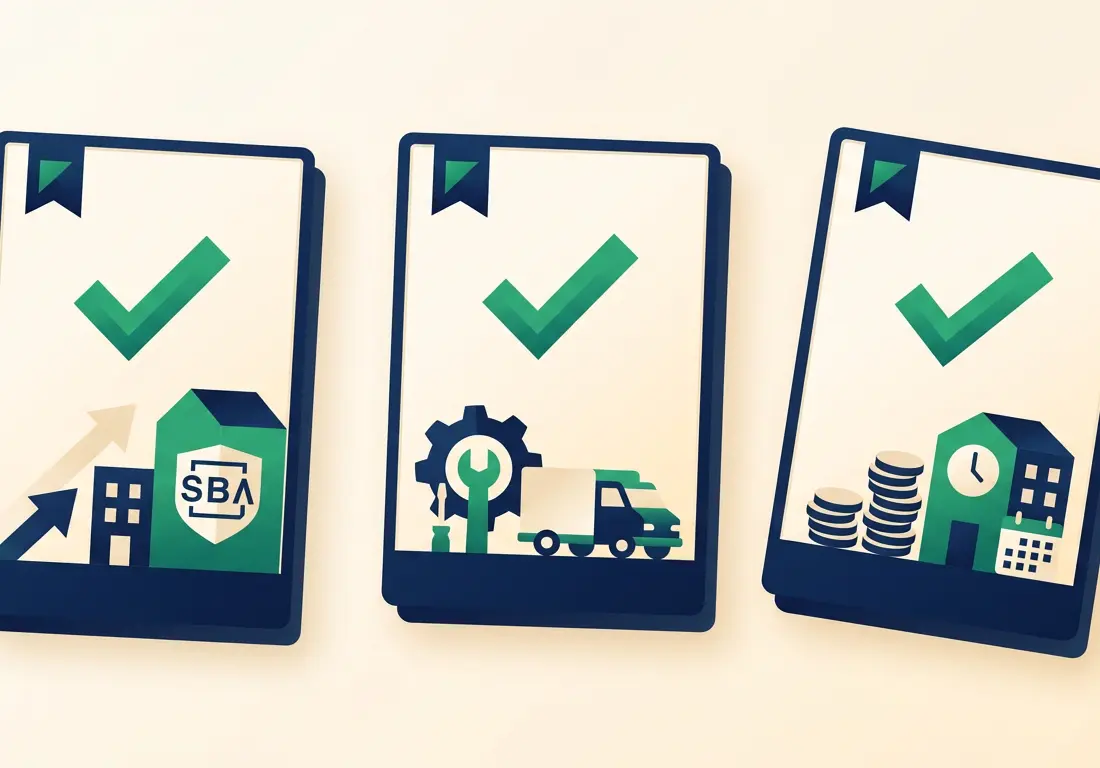
SBA, equipment financing, and term loans are the most veteran-friendly products.
Take the Next Step
Your military service developed skills that translate directly to business success. Now let that service open doors to the funding you need to build something lasting.
SmarterLends connects veteran entrepreneurs with lenders who value military experience and offer programs designed for those who served. Our matching process considers your service history, business goals, and funding needs to identify the best opportunities available.
Start your veteran business funding search today. Your next mission begins here.
Sources(4)
- 1.Veteran Small Business Certification (VetCert)U.S. Small Business Administration · Accessed January 2026
- 2.Office of Veterans Business DevelopmentU.S. Small Business Administration · Accessed January 2026
- 3.Small Business Credit Survey 2024: Report on Employer FirmsFederal Reserve Banks · Accessed January 2026
- 4.Annual Business SurveyU.S. Census Bureau · Accessed January 2026
Funding Estimator
Compare options for your business
Day-to-day operations, payroll, inventory.
Illustrative estimate only. Actual rates, terms, and eligibility depend on your application.
Continue exploring
Related questions
Tools & calculators
Ready to see what your business qualifies for?
Check eligibility in minutes. It won't impact your credit score.