

Key takeaways
- Indiana hosts over 545,000 small businesses employing nearly 1.2 million workers across manufacturing, healthcare, and retail sectors
- SBA 7(a) loans remain the most flexible option for Indiana businesses, with amounts up to $5 million and terms reaching 25 years for real estate
- Indiana does not have a state-specific commercial financing disclosure law - federal CFPB and FTC protections apply
- The Indiana SBA District Office in Indianapolis connects owners with preferred lenders and SBDC counselors statewide
- Manufacturing and logistics dominate Indiana's economy, driving strong demand for equipment financing and working capital lines
Indiana ranks among the Midwest's strongest manufacturing economies, with small businesses forming the backbone of communities from Indianapolis to Fort Wayne. According to U.S. News rankings, Indiana placed 39th among states for its business environment based on factors including business creation rates and tax burden. Understanding available funding options helps Hoosier entrepreneurs secure the capital needed for equipment, expansion, and daily operations.
Indiana small business landscape
The state's central location and robust logistics infrastructure make it attractive for businesses across multiple sectors. Indiana-based sellers on major e-commerce platforms moved more than 33 million products recently, with average annual earnings reaching $245,000 according to recent economic impact data.
Federal Reserve survey data shows that approximately 58% of small firms rely on credit cards as a financing source, highlighting the diverse capital needs across Indiana's business community.
- Funding Intensity
Top funding-heavy industries in Indiana
Manufacturing and advanced industry: Indiana's manufacturing sector remains a national leader, particularly in automotive parts, medical devices, and industrial equipment. These capital-intensive operations frequently require equipment financing ranging from $100,000 to several million dollars. SBA 504 loans prove especially popular for manufacturers purchasing heavy machinery or expanding production facilities.
Healthcare and life sciences: The healthcare sector drives significant funding demand across Indiana, from independent medical practices to specialized clinics and pharmaceutical operations. Business owners in this space typically seek working capital lines of credit for payroll and supplies, along with term loans for diagnostic equipment and facility improvements.
Transportation and logistics: Indiana's crossroads position makes it a logistics hub, with trucking companies, warehousing operations, and distribution centers requiring substantial capital. Equipment financing for fleet vehicles and material handling systems represents a major funding category, while commercial real estate loans support warehouse construction and expansion.
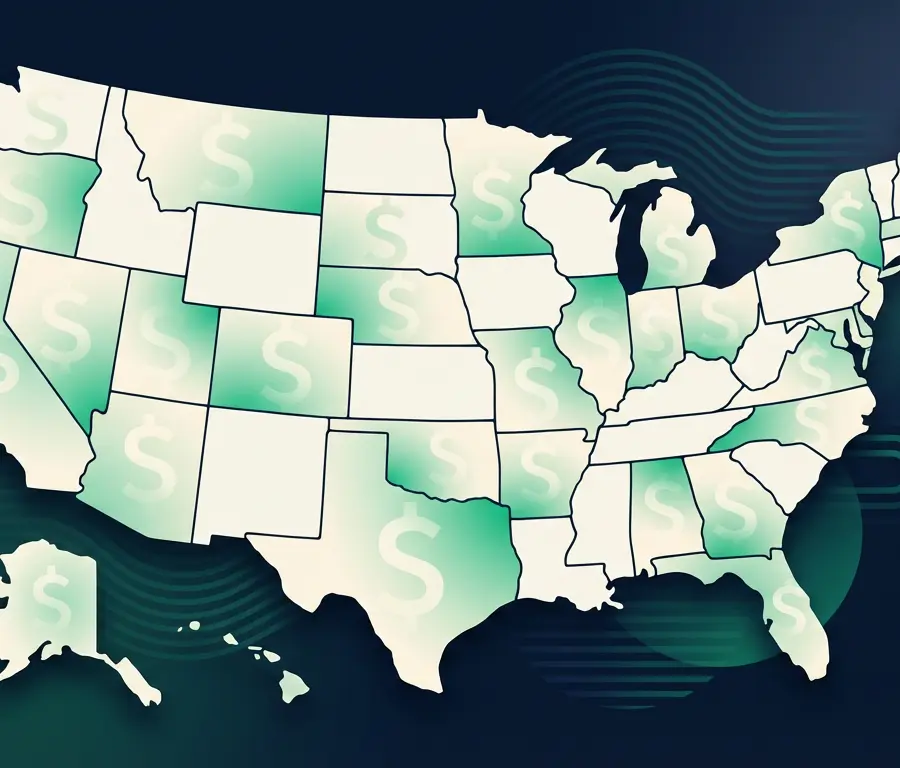
State-level funding patterns vary with industry mix and SBA district performance.
Funding options available in Indiana
| Funding Type | Typical Amount | Typical Speed | Best For |
|---|---|---|---|
| SBA 7(a) Loans | $50,000 - $5,000,000 | 30-90 days | Expansion, equipment, working capital |
| SBA 504 Loans | $125,000 - $5,500,000 | 60-90 days | Real estate, major equipment |
| Conventional Term Loans | $25,000 - $500,000 | 7-30 days | Established businesses with strong credit |
| Business Lines of Credit | $10,000 - $250,000 | 3-14 days | Ongoing working capital needs |
| Equipment Financing | $10,000 - $5,000,000 | 5-21 days | Machinery, vehicles, technology |
| Invoice Factoring | $10,000 - $1,000,000 | 1-7 days | Businesses with B2B receivables |
The SBA sets and announces guarantee fees every fiscal year. For the 2026 fiscal year running from October 1, 2025 through September 30, 2026, standard fee structures apply based on loan amount and maturity.
Indiana regulatory environment
Indiana does not currently have a state-specific commercial financing disclosure law comparable to California's or New York's requirements. This means commercial loan transactions follow federal guidelines established by the Consumer Financial Protection Bureau and Federal Trade Commission.
For commercial loans, Indiana's usury framework provides significant flexibility. Federal law through the Depository Institutions Deregulation and Monetary Control Act exempted federally chartered banks and certain other lenders from state usury limits. Combined with the Marquette National Bank decision applying to national banks, this effectively allows most institutional lenders to operate under federal rather than state rate caps for business lending.
State-chartered lenders and non-bank financing companies should consult Indiana statutes and legal counsel regarding applicable interest rate provisions for specific transaction types. The Indiana Department of Financial Institutions oversees state-chartered banks and certain lending activities.
Indiana SBA district office
The Indiana District Office serves the entire state from its Indianapolis location. This office connects business owners with SBA-preferred lenders, certifies businesses for government contracting programs, and coordinates with resource partners throughout Indiana.
Key resource partners include:
- Indiana Small Business Development Center (SBDC): Operating through regional centers statewide, the Indiana SBDC provides free one-on-one counseling on business planning, financial projections, and loan application preparation
- SCORE Indiana: Volunteer mentors with business expertise offer guidance on funding strategies and growth planning
- Women's Business Centers: Specialized support for women entrepreneurs navigating capital access
The SBA 8(a) program provides access to government contracting set-asides, mentorship, and business development assistance for socially and economically disadvantaged small businesses, including women business owners who meet certain income and net worth thresholds.
How do Indiana businesses typically access capital?
Most Indiana business owners start their funding search with existing banking relationships. Community banks and credit unions throughout the state participate in SBA lending programs, offering competitive rates backed by federal guarantees. For businesses seeking capital, understanding the specific requirements helps streamline the process.
SBA loans require complete business financial statements, personal financial statements for all owners with 20% or more equity, business tax returns, and a clear use-of-funds explanation. Processing times vary by lender but typically range from 30 to 90 days for SBA products.
What credit requirements apply for business funding in Indiana?
Credit requirements vary significantly by funding type. SBA 7(a) loans generally require personal credit scores of 680 or higher, though some lenders work with scores in the 650 range for strong applications. Conventional bank loans often require 700-plus scores. Alternative lenders and invoice factoring companies focus more heavily on business revenue and receivables quality than personal credit.
Business age matters as well. Most traditional lenders prefer at least two years of operating history with documented revenue. Newer businesses may find success with SBA microloans, equipment financing secured by the purchased assets, or revenue-based financing options.
What documentation do Indiana lenders require?
Prepare these materials before approaching lenders:
- Business and personal tax returns (two to three years)
- Year-to-date profit and loss statements
- Balance sheet
- Business bank statements (three to six months)
- Business licenses and articles of incorporation
- Commercial lease agreements
- Equipment lists for collateral-based financing
Business registration verification through the Indiana Secretary of State's INBiz portal confirms entity status and good standing, which lenders check during underwriting.
Start your funding search
Indiana's diverse economy supports multiple pathways to business capital. Whether you need equipment for a manufacturing operation, working capital for a healthcare practice, or expansion funding for a logistics company, matching your specific needs with the right funding product improves approval odds and overall cost.
Compare offers from multiple lenders to find competitive rates and terms suited to your situation. The Indiana SBDC and SCORE chapters offer free guidance to help you prepare strong applications and navigate the funding landscape effectively.
Editorial standards. SmarterLends is a referral marketing platform and earns compensation when users connect with funding partners. Our state-level funding information is editorially independent and grounded in named primary sources (SBA, Federal Reserve, FDIC, state regulators). See our Disclosures for details.
Frequently asked questions
Sources(9)
- 1.Indiana - WikipediaWikipedia · Accessed 2026-04-24
- 2.Amazon Impact Report Says $35B Added To Indiana GDPInkFreeNews · Accessed 2026-04-24
- 3.Why credit card rate caps hurt consumers, small businessesPaymentWeek · Accessed 2026-04-24
- 4.Usury - WikipediaWikipedia · Accessed 2026-04-24
- 5.SBA Loan Rates April 2026NerdWallet · Accessed 2026-04-24
- 6.Financing Tips for Women Business Owners: How to Secure Funding and Grow in 2026Crestmont Capital · Accessed 2026-04-24
- 7.How to Conduct a Secretary of State Business Search in IndianaSignzy · Accessed 2026-04-24
- 8.Indianapolis Business JournalIndianapolis Business Journal · Accessed 2026-04-24
- 9.Federal Reserve - WikipediaWikipedia · Accessed 2026-04-24
Funding Estimator
Compare options for your business
Day-to-day operations, payroll, inventory.
Illustrative estimate only. Actual rates, terms, and eligibility depend on your application.
Continue exploring
Related questions
Tools & calculators
Ready to see what your business qualifies for?
Check eligibility in minutes. It won't impact your credit score.