

Key takeaways
- Massachusetts has over 700,000 small businesses with particularly strong concentrations in healthcare, professional services, and technology sectors
- The Massachusetts SBA District Office in Boston serves the entire state with resource partners including regional SBDCs and SCORE chapters
- Massachusetts does not have a state-specific commercial financing disclosure law as of 2026 - federal CFPB protections apply
- Community banks like Rockland Trust have deep roots serving Massachusetts small businesses since 1907
- SBA disaster loans are available to qualifying Massachusetts businesses with interest rates as low as 4% for small businesses
Massachusetts stands as one of the nation's most dynamic small business environments, with a diverse economy spanning healthcare innovation, higher education, technology, and financial services. The Commonwealth's entrepreneurial ecosystem benefits from proximity to world-class universities, a highly educated workforce, and strong banking infrastructure. For Bay State business owners seeking capital, understanding the full landscape of funding options - from traditional bank loans to SBA-backed financing - is essential for making informed decisions.
Massachusetts small business landscape
The Massachusetts economy reflects a sophisticated mix of knowledge-based industries and traditional sectors. The state's concentration of hospitals, research institutions, and biotech firms creates unique funding dynamics, while its historic manufacturing and maritime heritage continues to support diverse business needs.
Massachusetts small businesses face particular considerations around the state's tax environment. Recent policy changes have affected high-income business owners, with more than 22,000 small businesses structured as S-corporations and partnerships facing adjusted tax treatment on pass-through income.
- Funding Intensity
Top funding-heavy industries in Massachusetts
Healthcare and Life Sciences
Massachusetts leads the nation in healthcare innovation, with the Boston-Cambridge corridor hosting numerous hospitals, research centers, and biotech startups. Healthcare businesses often require substantial capital for equipment, facility buildouts, and research capabilities. The sector's strong presence creates robust demand for SBA 504 loans to finance real estate and major equipment purchases, as well as working capital lines for operational needs.
Professional and Technical Services
The Commonwealth's concentration of financial services firms, consulting practices, and technology companies drives significant demand for flexible financing. Professional services businesses typically seek lines of credit for cash flow management and term loans for expansion. The state's educated workforce supports high-value service businesses that often qualify for favorable lending terms based on strong revenue profiles.
Education and Research
Beyond the major universities, Massachusetts hosts hundreds of private educational institutions, training centers, and research organizations. These businesses often need funding for facility improvements, technology infrastructure, and program development. The nonprofit status of many educational organizations makes them candidates for SBA disaster loans at preferential rates when qualifying events occur - currently available at 3.625% for private nonprofits.

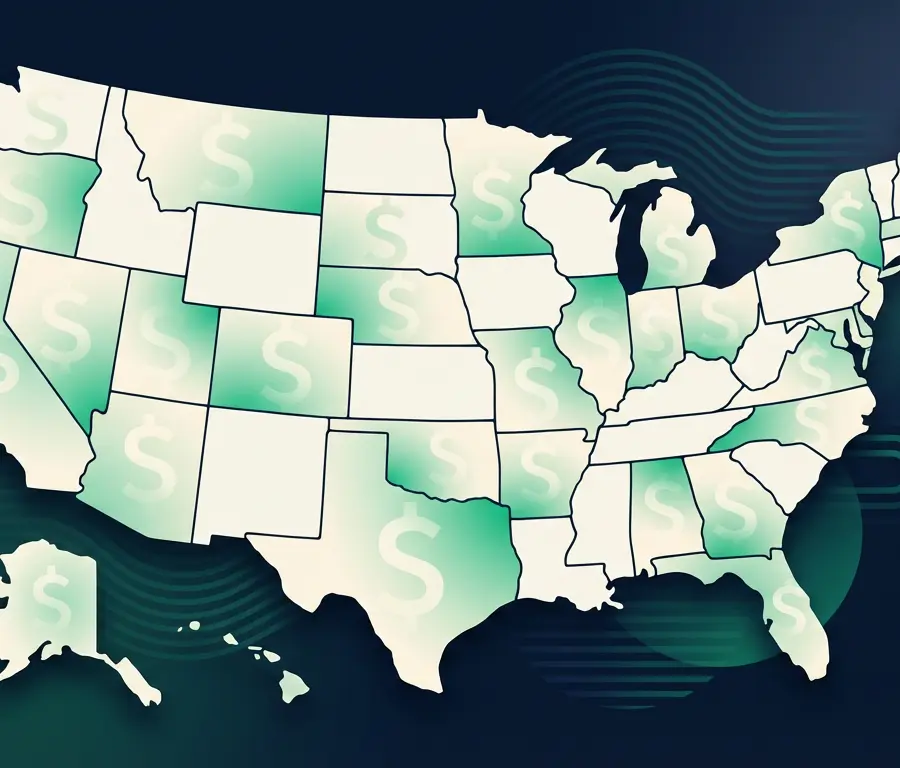
State-level funding patterns vary with industry mix and SBA district performance.
Funding options available in Massachusetts
| Funding Type | Typical Amount | Funding Speed | Best For |
|---|---|---|---|
| SBA 7(a) Loans | Up to $5 million | 30-90 days | Expansion, working capital, acquisitions |
| SBA 504 Loans | Up to $5.5 million | 60-90 days | Real estate, major equipment |
| Conventional Bank Loans | $50,000-$5 million | 14-45 days | Established businesses with strong credit |
| Business Lines of Credit | $10,000-$500,000 | 7-21 days | Cash flow management, seasonal needs |
| Equipment Financing | Up to $5 million | 3-14 days | Machinery, vehicles, technology |
| Invoice Factoring | Up to 90% of receivables | 1-7 days | B2B businesses with outstanding invoices |
Massachusetts businesses benefit from a strong community banking presence. Institutions like Rockland Trust have served Massachusetts entrepreneurs since 1907, providing relationship-based lending that understands local market conditions. The recent growth in existing consumer and small business customer relationships at regional banks demonstrates continued confidence in Massachusetts small business lending.
Massachusetts SBA district office
The Massachusetts SBA District Office is located in Boston and serves all business owners throughout the Commonwealth. The district office coordinates with an extensive network of resource partners to provide comprehensive support.
Small Business Development Centers (SBDCs): Massachusetts hosts multiple SBDC locations affiliated with state universities and colleges. These centers provide no-cost business consulting, including guidance on loan applications and financial management.
SCORE Massachusetts: Volunteer mentors with business experience offer free counseling to entrepreneurs at various stages. SCORE chapters operate throughout the state, including major locations in Boston, Worcester, and Springfield.
Women's Business Centers: Massachusetts WBCs, certified through organizations affiliated with WBENC, provide targeted support for women entrepreneurs seeking funding and business development assistance.
For businesses affected by declared disasters, the SBA offers Economic Injury Disaster Loans with interest rates as low as 4% for small businesses and 3.625% for private nonprofits, with terms extending up to 30 years.
Massachusetts regulatory environment
Massachusetts does not currently have a state-specific commercial financing disclosure law comparable to those enacted in California or New York. This means small business borrowers in Massachusetts rely on federal protections administered by the Consumer Financial Protection Bureau and Federal Trade Commission rather than state-mandated disclosure requirements.
Regarding interest rate regulations, Massachusetts maintains general usury statutes, but significant exemptions apply to commercial lending. Federally chartered banks and certain licensed lenders operate under federal preemption frameworks established by court decisions and legislation that effectively override state usury limits for many commercial transactions.
Business brokers and loan intermediaries in Massachusetts may face licensing requirements depending on their specific activities and compensation structures. Some states require licenses for commissioned brokers but not those working on hourly fee arrangements.
What credit score do I need for business funding in Massachusetts?
Most conventional bank loans and SBA-backed financing require personal credit scores of 680 or higher, though some lenders work with scores in the 620-650 range for well-qualified applicants. Alternative lenders may consider lower credit profiles but typically charge higher rates. Massachusetts businesses benefit from the state's strong community banking presence, where relationship factors sometimes offset marginal credit profiles.
How long does SBA loan approval take in Massachusetts?
SBA 7(a) loans typically take 30-90 days from application to funding, depending on lender processing times and application complexity. SBA 504 loans, which involve a Certified Development Company, generally require 60-90 days. Gathering complete documentation before applying - including tax returns, financial statements, and business plans - can significantly accelerate the timeline.
Are there grants available for Massachusetts small businesses?
True grants for for-profit businesses are limited, though Massachusetts entrepreneurs may access Small Business Innovation Research (SBIR) and Small Business Technology Transfer (STTR) federal grants for research and development activities. The state's strong university presence creates opportunities for technology commercialization funding. Most business owners find that loan products, despite requiring repayment, offer more accessible and substantial capital than grant programs.
Start your funding search
Massachusetts offers one of the nation's most robust small business ecosystems, with strong banking infrastructure, extensive SBA resources, and diverse financing options suited to the state's varied industries. Whether you're expanding a healthcare practice in Boston, launching a technology venture in Cambridge, or growing a manufacturing operation in Worcester, understanding your funding options is the first step toward smart capital decisions. Connect with the Massachusetts SBA District Office or your local SBDC to explore which financing products best match your business needs and growth objectives.
Editorial standards. SmarterLends is a referral marketing platform and earns compensation when users connect with funding partners. Our state-level funding information is editorially independent and grounded in named primary sources (SBA, Federal Reserve, FDIC, state regulators). See our Disclosures for details.
Frequently asked questions
Sources(10)
- 1.SBA Disaster Loans for Oklahoma BusinessesU.S. Small Business Administration · Accessed 2026-04-24
- 2.Important News from Rockland Trust and Enterprise BankRockland Trust · Accessed 2026-04-24
- 3.Massachusetts Millionaires Tax Impact on Small BusinessesIllinois Policy Institute · Accessed 2026-04-24
- 4.WBENC Women's Business Enterprise National CouncilWomen's Business Enterprise National Council · Accessed 2026-04-24
- 5.CDC Small Business Financing: Leveraging the 504 Loan Program for GrowthU.S. Small Business Administration · Accessed 2026-04-24
- 6.More Small Businesses Can Access $5 Million SBA LoanForbes Advisor · Accessed 2026-04-24
- 7.Business Broker Licensing RequirementsWikipedia · Accessed 2026-04-24
- 8.Usury Laws and Federal PreemptionWikipedia · Accessed 2026-04-24
- 9.Federal Reserve OverviewWikipedia · Accessed 2026-04-24
- 10.Consumer Financial Protection BureauConsumer Financial Protection Bureau · Accessed 2026-04-24
Funding Estimator
Compare options for your business
Day-to-day operations, payroll, inventory.
Illustrative estimate only. Actual rates, terms, and eligibility depend on your application.
Continue exploring
Related questions
Tools & calculators
Ready to see what your business qualifies for?
Check eligibility in minutes. It won't impact your credit score.