

Key takeaways
- Nebraska's economy relies heavily on agriculture, manufacturing, and healthcare, shaping the types of funding local businesses need most
- The SBA Nebraska District Office in Omaha coordinates 7(a) and 504 loan programs throughout the state
- Nebraska does not currently have a state-specific commercial financing disclosure law, though federal consumer protections still apply
- Nebraska's usury framework includes exemptions for most commercial lending transactions
- Nebraska SBDC and SCORE chapters provide free consulting to help owners prepare funding applications
Nebraska's entrepreneurial landscape reflects the state's deep agricultural roots alongside growing sectors in healthcare, technology, and advanced manufacturing. Small businesses form the backbone of communities from Omaha to Scottsbluff, driving employment and economic vitality across both urban centers and rural areas.
Nebraska small business landscape
Nebraska's business environment benefits from a stable workforce, relatively low operating costs, and strategic central location for distribution and logistics. The state's economy has historically outperformed national averages in employment stability, though recent analysis suggests Nebraska faces challenges in job creation compared to prior decades.
The Federal Reserve's Small Business Credit Survey indicates that approximately 58% of small firms rely on credit cards as a financing source, highlighting the diverse funding methods Nebraska entrepreneurs employ beyond traditional bank loans.
- Funding Intensity
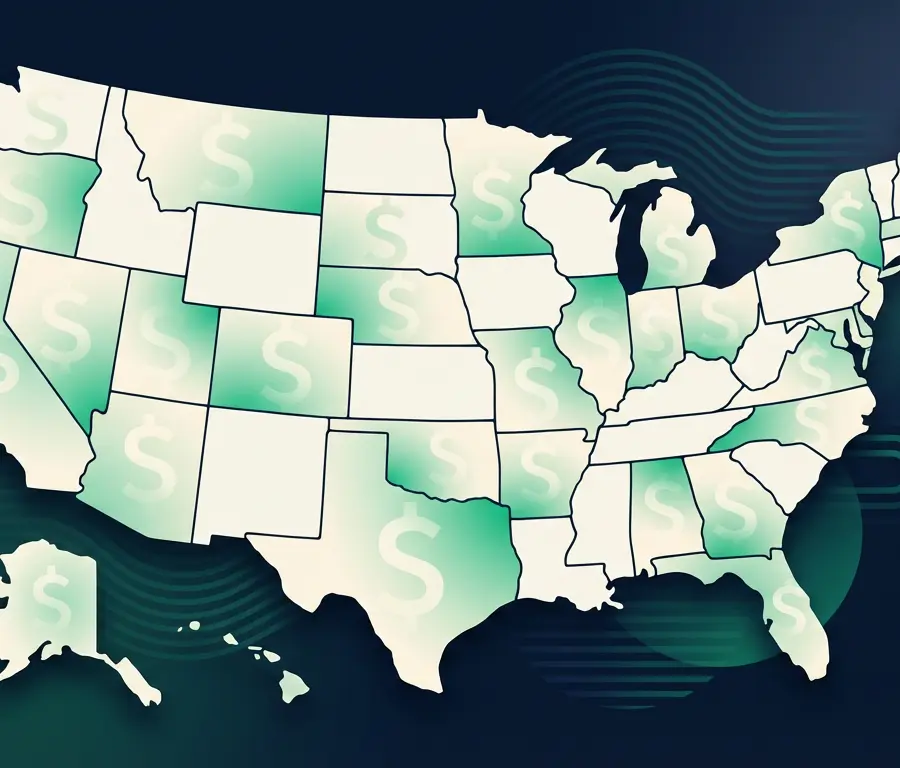
Top funding-heavy industries in Nebraska
Agriculture and food processing
Agriculture remains Nebraska's signature industry, with the state ranking among the nation's top producers of corn, soybeans, and beef cattle. Farm operations and food processing facilities require substantial capital for equipment, land acquisition, and working capital to manage seasonal cash flow cycles. SBA 504 loans are particularly popular for purchasing agricultural processing equipment and expanding cold storage facilities.
Healthcare and social assistance
Nebraska's healthcare sector continues expanding to serve both urban populations and rural communities facing provider shortages. Medical practices, home health agencies, and assisted living facilities frequently seek funding for equipment upgrades, facility expansions, and electronic health record implementations. Term loans and SBA 7(a) financing help healthcare entrepreneurs manage the capital-intensive nature of medical operations.
Manufacturing and logistics
Nebraska's central location makes it attractive for manufacturing and distribution operations. Companies producing machinery, transportation equipment, and processed foods tap equipment financing and commercial real estate loans to scale operations. The state's proximity to major transportation corridors supports logistics businesses that need working capital lines to manage inventory and fuel costs.
State-level funding patterns vary with industry mix and SBA district performance.
Funding options available in Nebraska
| Funding Type | Typical Amount | Typical Speed | Best For |
|---|---|---|---|
| SBA 7(a) Loans | Up to $5 million | 30-90 days | Expansion, working capital, refinancing |
| SBA 504 Loans | Up to $5.5 million | 60-90 days | Real estate, major equipment purchases |
| Conventional Term Loans | $50,000-$1 million | 1-4 weeks | Established businesses with strong credit |
| Business Lines of Credit | $10,000-$500,000 | 1-2 weeks | Seasonal inventory, cash flow management |
| Equipment Financing | Up to 100% of equipment value | 1-3 weeks | Machinery, vehicles, technology |
| SBA Microloans | Up to $50,000 | 2-4 weeks | Startups, small working capital needs |
Nebraska SBA district office
The SBA Nebraska District Office in Omaha serves as the primary federal resource for small business lending programs throughout the state. Located at 10675 Bedford Avenue, Suite 100, the office coordinates with approved SBA lenders and certified development companies to deliver 7(a) and 504 loan programs.
Nebraska entrepreneurs also benefit from the Nebraska Business Development Center (NBDC), which operates locations across the state affiliated with the University of Nebraska system. NBDC advisors provide free one-on-one consulting on business planning, financial projections, and loan application preparation. Additionally, SCORE Nebraska chapters in Omaha and Lincoln offer volunteer mentor support from experienced business professionals.
The University of Nebraska actively supports student and early-stage entrepreneurs through programs like the Nebraska Entrepreneurship Accelerator, which recently awarded $10,000 to top ventures in its New Venture Competition.
Nebraska regulatory environment
Nebraska does not currently have a state-specific commercial financing disclosure law similar to those enacted in California or New York. Business owners seeking financing rely on federal protections administered by the Consumer Financial Protection Bureau and Federal Trade Commission for transparency in lending terms.
Regarding interest rates, Nebraska's usury framework historically caps interest at 16% for most consumer loans, but commercial lending transactions are generally exempt from these caps when made to business entities. This means commercial lenders can structure rates based on risk assessment rather than statutory ceilings. Business owners should carefully review all financing terms and consider consulting with an attorney for significant transactions.
Nebraska does not require separate state licensing for most commercial lenders, though lenders must comply with applicable federal regulations and any specific requirements for certain lending activities.
Economic considerations for Nebraska businesses
Nebraska's economy faces evolving challenges. Recent reporting indicates the state's job creation pace has slowed compared to historical performance, prompting discussions among business and community leaders about strategies to reinvigorate growth. Key focus areas include tax reform, workforce development, and housing construction to support economic expansion.
The state's casino and gaming industry has shown notable growth, with Nebraska casinos reporting $28 million in revenue in March 2026, representing a 42.6% year-over-year increase. This emerging sector creates new opportunities for hospitality and entertainment businesses seeking capital.
Tariff policies continue affecting Nebraska businesses, particularly in agriculture and manufacturing. As reported by Nebraska advocacy organizations, businesses face increased operating costs that impact funding needs and repayment capacity.
Frequently asked questions
Nebraska business owners often ask about the timeline for SBA loan approval. The process typically takes 30 to 90 days depending on loan complexity, documentation completeness, and lender workload. Working with an experienced SBA-preferred lender and preparing thorough financial documentation can accelerate the process.
Another common question involves collateral requirements. While SBA loans require collateral to the extent available, the programs are designed to help businesses that might not qualify for conventional financing. Equipment financing often uses the purchased equipment itself as collateral, reducing the need for additional business assets.
Business owners also inquire about credit score requirements. Most conventional lenders prefer credit scores above 680, though SBA programs may work with scores in the mid-600s when other business fundamentals are strong. The Nebraska SBDC can help owners understand their credit position and identify steps to improve qualification chances.
Take the next step for your Nebraska business
Whether you operate a farm equipment dealership in Grand Island, a healthcare practice in Lincoln, or a tech startup in Omaha, understanding your funding options positions your business for growth. Nebraska's network of SBA resources, SBDC advisors, and SCORE mentors provides free support to help you navigate the lending landscape. Start by connecting with your local NBDC office to discuss your specific funding needs and develop a strategy tailored to your business goals.
Editorial standards. SmarterLends is a referral marketing platform and earns compensation when users connect with funding partners. Our state-level funding information is editorially independent and grounded in named primary sources (SBA, Federal Reserve, FDIC, state regulators). See our Disclosures for details.
Frequently asked questions
Sources(10)
- 1.Small Business Credit SurveyFederal Reserve Small Business Credit Survey · Accessed 2026-04-24
- 2.Why credit card rate caps hurt consumers, small businessesPayment Week · Accessed 2026-04-24
- 3.Husker entrepreneurs earn donor-funded awards in New Venture CompetitionUniversity of Nebraska · Accessed 2026-04-24
- 4.Stuck in Neutral: Nebraska used to be a leader in creating jobs and spurring growthFlatwater Free Press · Accessed 2026-04-24
- 5.Nebraska casinos report $28 million in revenue in MarchCDC Gaming · Accessed 2026-04-24
- 6.Nebraska For Us statement as tariff refund portal opensNebraska For Us · Accessed 2026-04-24
- 7.Usury Laws by State 2026World Population Review · Accessed 2026-04-24
- 8.SBA Loan Maximums in 2026Lendio · Accessed 2026-04-24
- 9.Consumer Financial Protection BureauConsumer Financial Protection Bureau · Accessed 2026-04-24
- 10.U.S. Small Business AdministrationU.S. Small Business Administration · Accessed 2026-04-24
Funding Estimator
Compare options for your business
Day-to-day operations, payroll, inventory.
Illustrative estimate only. Actual rates, terms, and eligibility depend on your application.
Continue exploring
Related questions
Tools & calculators
Ready to see what your business qualifies for?
Check eligibility in minutes. It won't impact your credit score.